Dotonbori

Writes the autumn colour pages and follows the forecasts as they are issued, which is more than one forecast.
UpdatedDotonbori costs nothing and is open all night. Those are the only two logistical facts you need, and they mean the planning question is not whether to go but which hour to spend there – because the same four hundred metres of canal are three different places depending on when you arrive.
It is also, bluntly, not a place to eat well by default. The strip is the most tourist-priced ground in Osaka, and the good version of every dish sold along it exists two streets away for less. Come for the walk; eat off it.
At a glance
- Admission
- Free. There is no gate, no ticket and no closing time
- Best hour
- After 21:00 for the signs, before 10:00 for the street itself
- Boat
- Tombori River Cruise ¥2,000, on the hour and half-hour 11:00–21:00
- Time needed
- An hour to walk it, an evening if you eat
In this guide
Three streets in one
Before ten in the morning the shutters are down, the canal is empty, the delivery vans are in and you can see that Dotonbori is a narrow, slightly shabby, very old entertainment district built along a canal dug in 1615. The Glico running man is still there and nobody is photographing him. This is the version almost nobody sees and it is the one that explains the place.
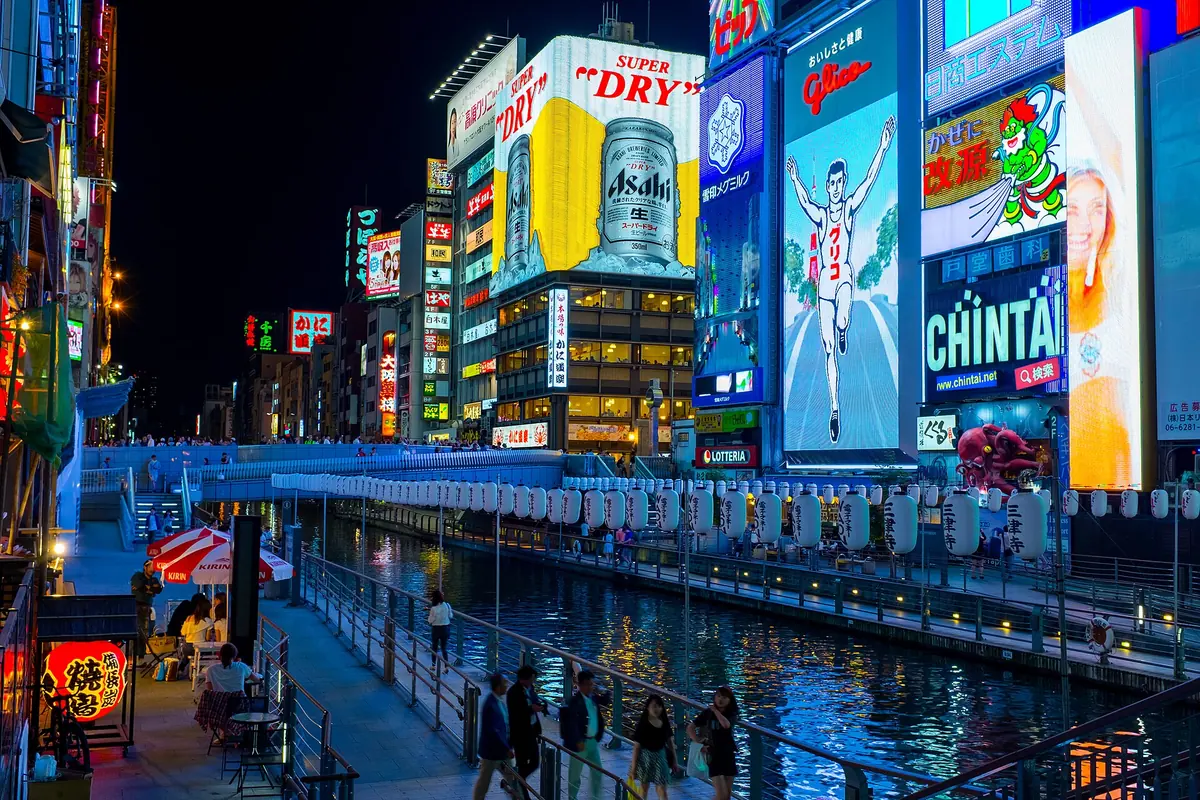
After nine at night it is what you came for: the signs lit, the canal black and reflective, the mechanical crab moving its legs above Kani Doraku, the Kuidaore drumming boy, the vast pufferfish lantern of Zuboraya’s successor tenants. Lean on the rail at Ebisubashi, which is the bridge the Glico sign faces, and accept that you are one of four hundred people doing the same thing.
Between about one and six in the afternoon it is a slow-moving crush in daylight, with every sign switched off and no atmosphere to compensate. That is the hour most visitors are given by their itineraries, and it is the reason a steady number of people come away thinking Dotonbori is overrated.
What to look at besides the Glico man
Turn your back on the canal. Hozenji Yokocho is two minutes south: a pair of flagstoned lanes, lantern-lit, with a small temple whose stone Fudo Myoo statue is completely furred over with moss because passers-by have been throwing water at it for four centuries. It is twenty metres from the loudest street in Osaka and it is silent.
West of Ebisubashi the canal walk continues along the Tombori Riverwalk at water level, which is the only place you can photograph the signs without a crowd in front of them. From here the Tombori River Cruise runs a twenty-minute loop for ¥2,000, on the hour and half-hour between 11:00 and 21:00, from the pier at Tazaemon-bashi by Don Quijote. It is free on the Amazing Pass and it is the one thing here that actually benefits from being on the water.
North of the canal, Shinsaibashi-suji is a covered shopping arcade running nearly a kilometre; south, the Namba side has the theatres and the older eating streets. The whole area is treated properly on the Namba and Dotonbori district page.
Eating, and not eating, on the strip
The canal-front stalls sell takoyaki at a premium for a product that is frequently under-cooked to survive the queue, which is the opposite of what takoyaki is supposed to be. Wanaka at eight pieces for ¥500 is the honourable exception on this side of town.
For okonomiyaki, walk ten minutes to Mizuno, which holds a Bib Gourmand and is open 11:00 to 22:00. For kushikatsu, the serious version is in Shinsekai, two subway stops south. Neither detour is long and both are the difference between having eaten in Osaka and having eaten near a sign.
Frequently asked questions
Does Dotonbori cost anything?
No. It is a public street along a canal, free at all hours, with no gate and no closing time. The only things you pay for are food and the river cruise.
What is the best time to see Dotonbori?
After 21:00 for the signboards, when the neon is on and the crowd has thinned from its evening peak. Before 10:00 if you want to see the street itself rather than the spectacle.
Where is the Glico sign?
On the north bank facing Ebisubashi, the pedestrian bridge across the canal at the Shinsaibashi end. The current sign is an LED version installed in 2014, the sixth since 1935.
Is the Dotonbori food any good?
Some of it, at a premium. The canal-front stalls are priced for tourists and the takoyaki is often undercooked to keep a queue moving. The better versions of every Osaka dish are two or three streets off the strip.
How long should I spend in Dotonbori?
An hour for the walk, including Hozenji Yokocho and the Riverwalk. Longer only if you are eating, drinking or taking the boat. It is a short street and giving it half a day is how it disappoints people.
Further reading
Official sources
- OSAKA-INFO – Dotonbori – Osaka Convention and Tourism Bureau area listing
- OSAKA-INFO – Namba – The surrounding district
- Tombori River Cruise – Ipponmatsu Kaiun (official operator) – Fare, duration, departure times and pier
- Osaka Amazing Pass – participating attractions – The cruise is covered by the pass