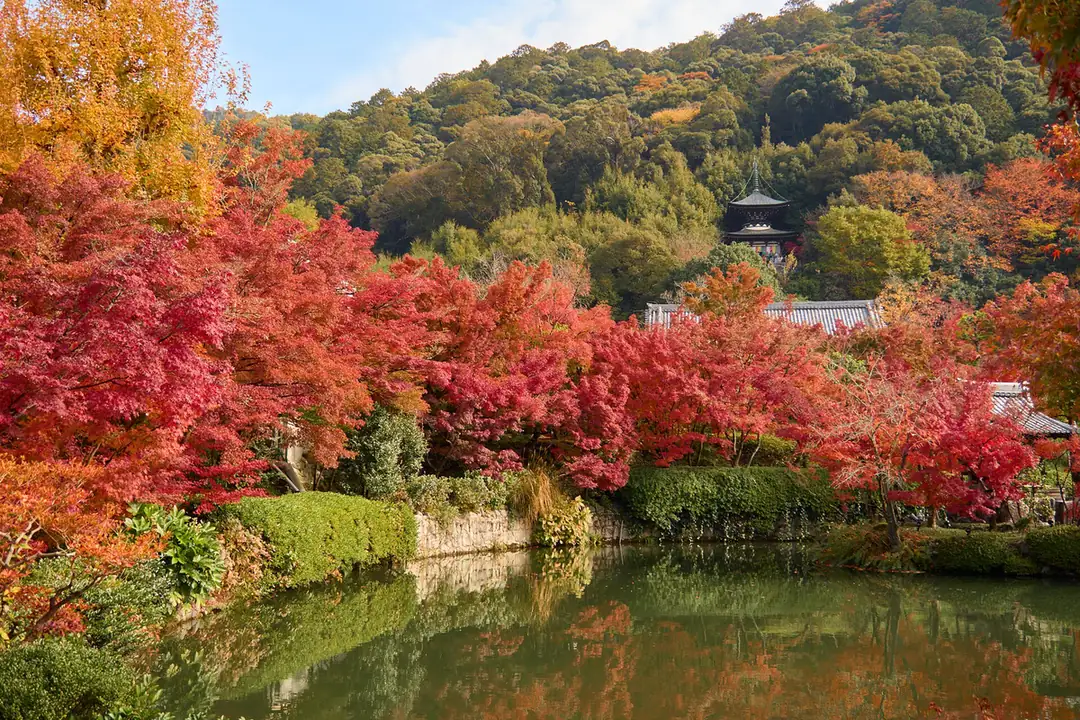
Kyoto autumn leaves

Writes the autumn colour pages and follows the forecasts as they are issued, which is more than one forecast.
UpdatedThis page carries dated prices or seasonal forecasts checked on the date above, and that window has now passed. Re-check the sources at the foot of the page before you book anything.
Kyoto's maples peak in the last week of November. Not early November, which is when a great many people book, and not mid-October, which is when the mountains turn and the photographs that made you want to come were taken.
Weathernews issued its first 2026 forecast on 3 September and the national call is that colour arrives later than normal this year, because the autumn has been warm. Its second forecast is due in early October and these dates will move. What follows is what is published now, with the date it was checked.
At a glance
- 2026 peak starts
- Tōfuku-ji ~24 Nov · Eikandō ~25 Nov · Arashiyama ~24 Nov
- Typical window
- Mid November to early December
- This year's call
- Later than normal – a warm autumn
- Early November
- Still green. Go to Nikkō or Takayama instead.
In this guide
The 2026 forecast, and who is issuing it
There is more than one forecast and they are not the same thing, which is why English-language pages contradict each other every autumn.
| Forecaster | 2026 status | What it says for Kyoto |
|---|---|---|
| Weathernews | First forecast, 3 September 2026 | Tōfuku-ji ~24 Nov, Eikandō ~25 Nov, Arashiyama ~24 Nov |
| Japan Meteorological Corporation | First forecast, 2 September 2026 | No Kyoto figure published; Tokyo ~29 Nov, Osaka ~4 Dec |
| Japan Weather Association (tenki.jp) | Not yet issued – due late September | – |
That last row matters. tenki.jp is the forecast most Japanese aggregators quote, and it has not published a 2026 one. Its site currently still shows the 2025 third forecast, and several English pages are already citing that as if it were this year's.
There is also the Meteorological Agency's own record, which is a different measurement again: it watches one sample tree at each city weather station. Its Kyoto maple normal is around 5 December, weeks after the temple gardens peak, because the sample tree stands in the warm middle of the city. Never plan a trip on that number.
They do not all turn at once
In a typical year Eikandō runs about a week ahead of Arashiyama. If your dates are on the early side, that is the single most useful fact on this page: aim east, not west.
Eikandō's typical window is mid to late November and it is the shortest of the three. Tōfuku-ji runs mid November into early December. Arashiyama is the latest, late November into December. In 2026 the forecast has them closer together than usual, which is what a warm autumn does.
What the autumn period costs you
Kyoto temples charge more in the autumn period and change their hours, and the dates are not the same at each one.
Tōfuku-ji runs its autumn period 14 November to 6 December. The Tsūten-kyō ticket goes from ¥600 to ¥1,000, and the combined ticket is withdrawn for the period – so the two halves must be bought separately. Its own page prints those dates without a year and warns they change annually, so check before you travel. Parking closes 25 October to 8 December.
Eikandō has published its 2026 dates. The autumn day exhibition runs 11 November to 6 December at ¥1,500, and the illumination 20 November to 6 December at ¥1,000 flat.
One detail that catches almost everybody: at Eikandō day and night are separate admissions with a full clear-out between them. You cannot pay in the afternoon and stay through into the illumination. Cars and coaches are barred from the approach during the period.
Tōfuku-ji's night viewing for autumn 2026 has not been announced. When it has run it has been reservation-only through a travel channel, with limited capacity – not a walk-up evening opening. Do not build an evening around it on the strength of last year.
The crowds are the constraint, not the colour
Tōfuku-ji at peak is the most crushed place in Kyoto, and the Tsūten-kyō bridge is a one-direction shuffle. Arashiyama's bamboo grove before eight in the morning is worth the alarm; by eleven it is a queue with trees in it.
The practical version: pick one headline temple per day and be at its gate when it opens, then spend the afternoon somewhere nobody has heard of. The colour is everywhere in late November. The crowds are only in about six places.
The three that matter, and what they cost this autumn
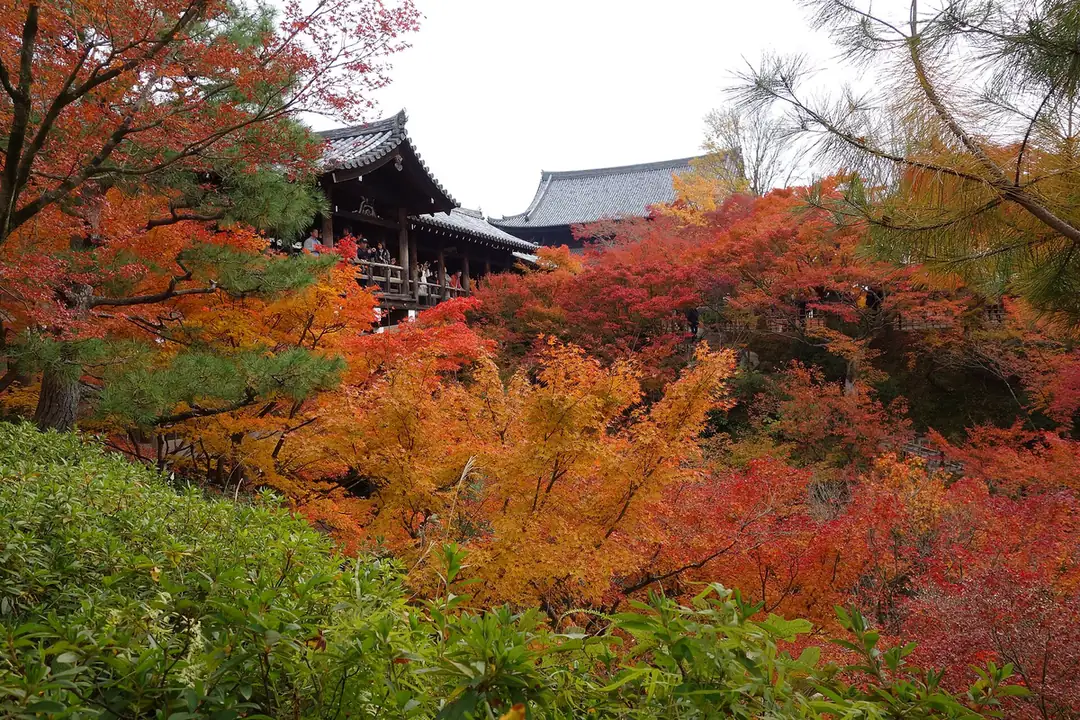
Tōfuku-ji
Worth itThe best maple ravine in Kyoto, and the one that behaves most like a crush. Go at opening or not at all.
The autumn period runs 14 November – 6 December, when the Tsūten-kyō ticket rises to ¥1,000 and the combined ticket is withdrawn. The temple prints those dates without a year and warns they change annually. Parking closes 25 October – 8 December.
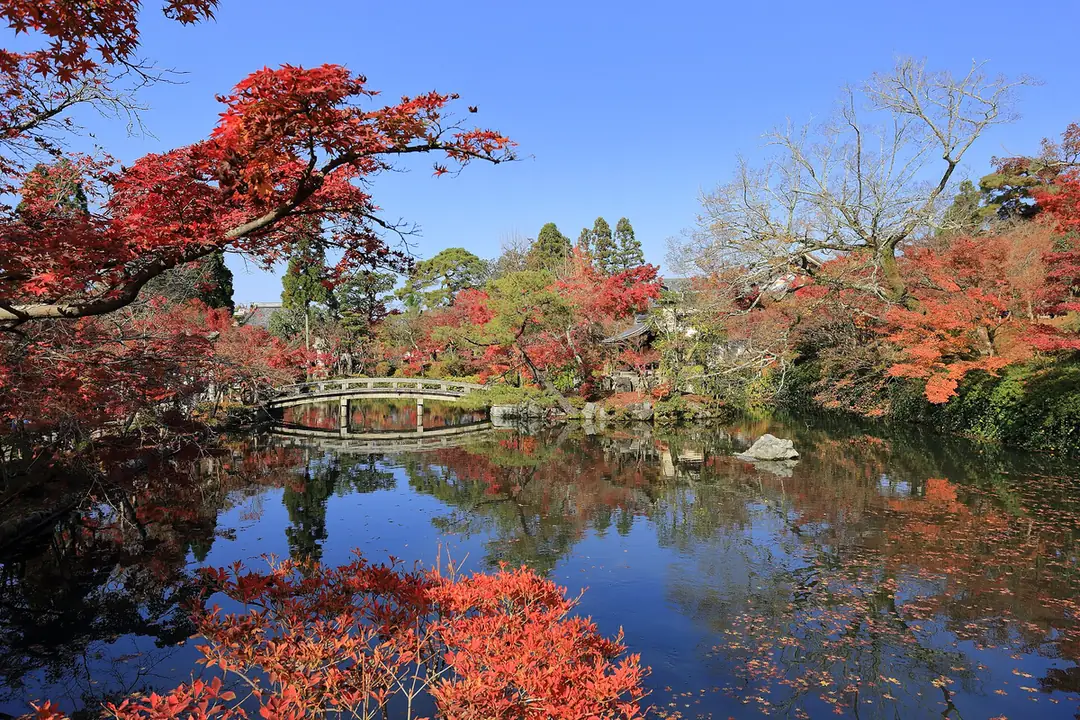
Eikandō
Worth itPeaks about a week before Arashiyama, which makes it the one to aim at if your dates are early.
Autumn 2026 dates are published: day exhibition 11 November – 6 December, illumination 20 November – 6 December. Day and night are separate admissions with a full clear-out between them – you cannot stay through from afternoon into the illumination. Cars and coaches are barred from the approach during the period.
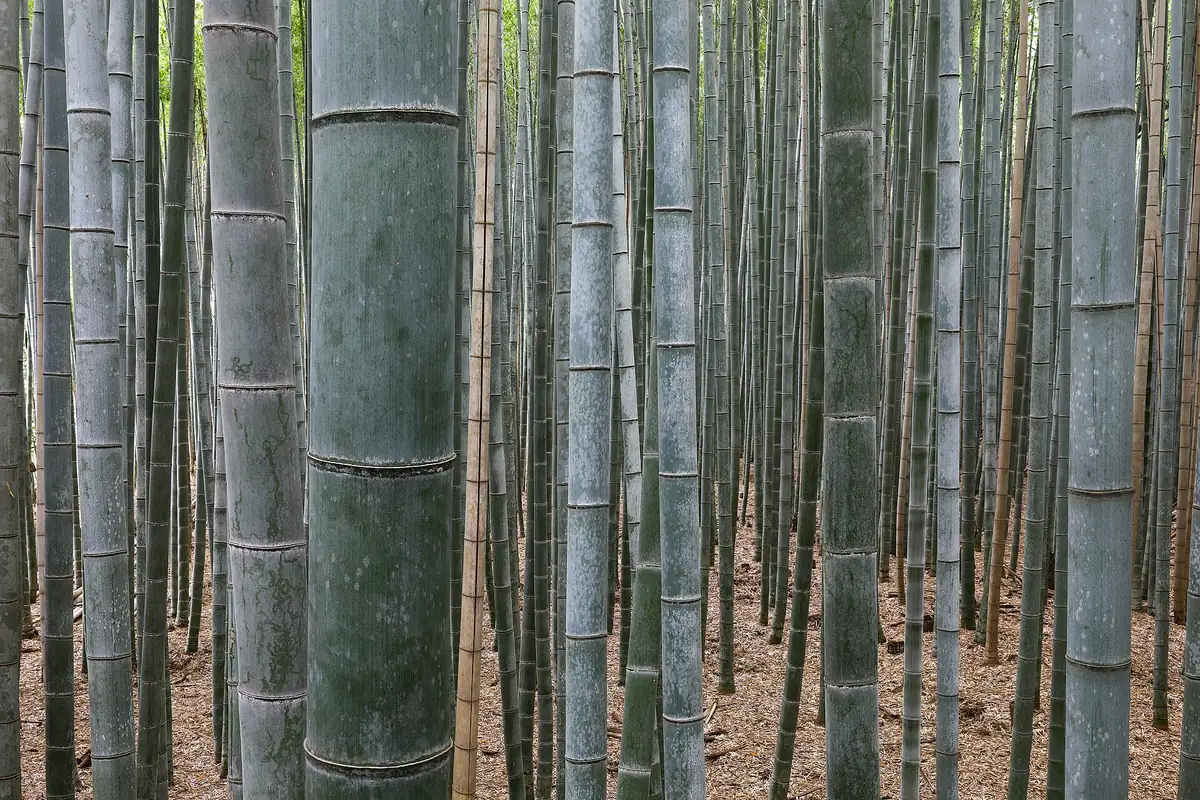
Arashiyama
It dependsThe bamboo grove before about 08:00 is worth the alarm. By eleven it is a queue with trees.
Tours you can book for this
Kyoto: Arashiyama Customized Rickshaw Tour & Bamboo Forest
The rickshaw runs the lanes the walking crowd cannot reach, and the price scales with the route you pick.
✓ Verified GetYourGuide reviews
Kyoto: Serene Morning Walk in Arashiyama Bamboo Grove
An early start is the whole point at Arashiyama.
Complete Arashiyama Experience – Bamboo, Monkeys & Gardens
Bamboo grove, monkey park and Tenryu-ji in one pass – the three Arashiyama sights that charge separately.
✓ Verified GetYourGuide reviews
Booking through these links supports this site at no cost to you. Prices move day to day, so we do not print them here.
Frequently asked questions
When do the autumn leaves peak in Kyoto?
The last week of November in a typical year. For 2026, Weathernews forecasts peak starting about 24 November at Tōfuku-ji and Arashiyama and about 25 November at Eikandō. This year's national call is later than normal because of a warm autumn.
Will I see autumn colour in Kyoto in early November?
Very little. Kyoto is still mostly green in early November – on-the-ground reports in 2025 had it only “starting to change” on 11 November. If your dates are fixed to early November, go to Nikkō or Takayama instead, which peak weeks earlier.
How much does Tofuku-ji cost in autumn?
¥1,000 for Tsūten-kyō and Kaisandō during the autumn period, up from ¥600, and the combined ticket with the Hōjō garden is not sold during those weeks. The period runs 14 November to 6 December, though the temple warns the dates change each year.
Can I stay at Eikando from the afternoon into the illumination?
No. Day and night are separate admissions and the temple clears the grounds between them. The day exhibition runs to 16:00 reception; the illumination reception opens at 17:30 and costs a separate ¥1,000.
Which Kyoto temple turns first?
Eikandō, typically about a week before Arashiyama. Its window is also the shortest of the three, mid to late November, so it is the one to aim at if you are travelling on the early side.
Further reading
Official sources
- Weathernews – 2026 autumn foliage forecast – First forecast, 3 September 2026; later than normal nationwide
- Weathernews – Tōfuku-ji spot page – 2026 peak-start date and typical window
- Tōfuku-ji – visiting information (official) – Autumn period dates, admission, hours, parking closure
- Eikandō – announcements (official) – Autumn 2026 dates and prices, day/night separation
- Japan Guide – autumn colour report – Independent cross-check on typical windows