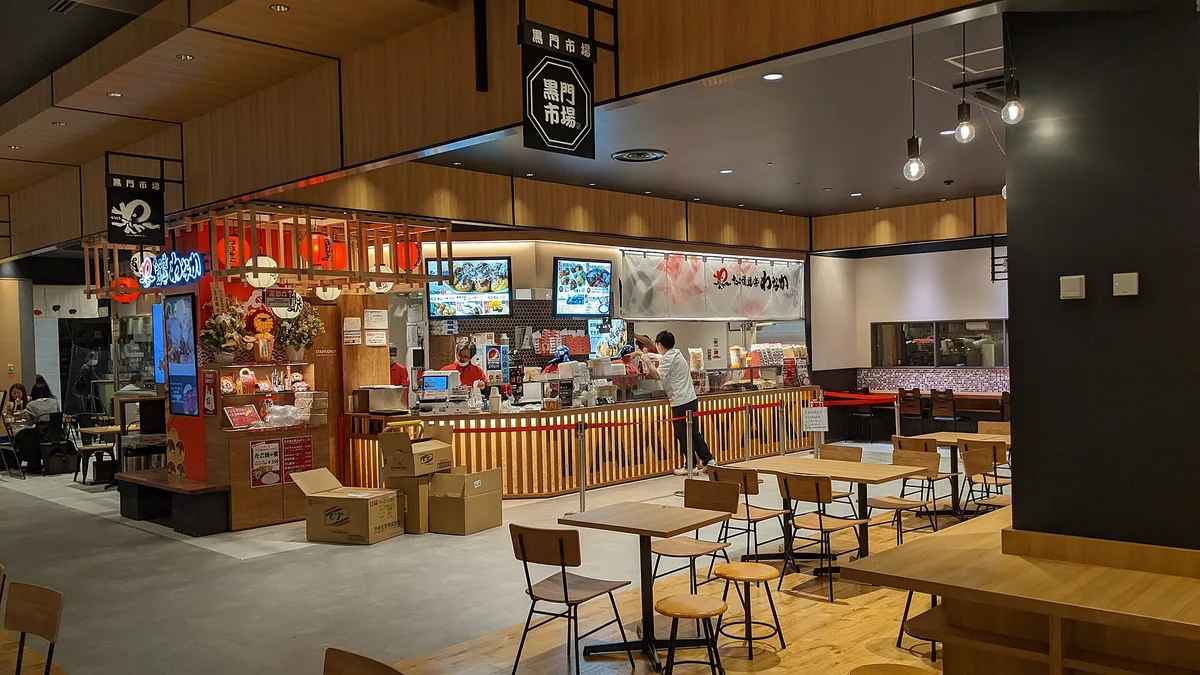
Takoyaki Doraku Wanaka

Writes the logistics pages. Works to one rule: a price comes from the company that charges it.
UpdatedEight pieces for ¥500. That is the portion and that is the price, and it is the benchmark against which every other takoyaki transaction in the city should be judged.
Wanaka is a working takoyaki stand in Sennichimae rather than a restaurant, and the thing it does that the canal-front operations on Dotonbori do not is cook the batter all the way through the outside while leaving the inside deliberately liquid. That is the dish. Anything set through the middle is a different and worse food.
At a glance
- Price
- ¥500 for eight pieces, the standard portion
- Style
- Cooked to order on cast-iron plates in front of you, not held under a lamp
- Where
- Sennichimae, just off the Namba end of the arcades
- Eat
- Standing, from the tray, immediately. It does not travel
In this guide
The centre is meant to be molten
Takoyaki batter is much wetter than a pancake batter – thin, dashi-heavy, closer to cream than to dough. It is poured into a cast-iron plate of hemispherical wells, a cube of octopus goes in, and the balls are turned with picks as the outside sets so the uncooked batter rolls to the inside of a widening shell.
Done right the result is a thin crisp sphere with a molten savoury custard inside it that has never fully set and is not supposed to. The first one will burn your mouth. That is not a failure of the cook; it is the dish working, and anyone who tells you to wait five minutes is telling you to eat it wrong. Bite a small hole, let the steam out, then eat it.
The reason the canal stalls disappoint is structural rather than malicious. A stall serving a forty-person queue cannot fry to order, so it cooks in advance and holds the trays, and held takoyaki continues to cook and eventually sets. What you get is a solid dumpling with sauce on it. Wanaka’s plates are turned in front of you and go straight into the tray.
What to order and how to eat it
The standard is eight pieces for ¥500, sauce and mayonnaise and aonori and bonito. There are variants – with ponzu, with a light dashi to dip into, with spring onion – and the plain sauced version is the right first order because it is the one everything else is measured against.
Eat it standing, at the counter, out of the paper tray, with the picks provided. It does not travel: the crust softens within about four minutes and the whole difference between a good and a mediocre takoyaki disappears with it. Carrying a tray of these back to your hotel converts a ¥500 pleasure into a ¥500 disappointment.
The stand also does a takosen, takoyaki pressed between two prawn crackers, which is a genuinely good idea and very hard to eat with dignity.
Where it sits, and the invention
Sennichimae, at the Namba end of the arcades, two or three minutes’ walk from the canal and a different economy entirely. There are other branches around the city, including at Shin-Osaka, which are useful if you are catching a shinkansen; the Sennichimae stand is the one to use if you are already in Minami.
The dish itself was invented in Osaka in 1935 by Endo Tomekichi at a stall called Aizuya, who put octopus and dashi into an existing Kansai batter snack and produced something that has since become the city’s emblem. It is ninety years old, it is street food, and it has never stopped being sold in ¥500 portions at counters like this one, which is more or less the whole argument for Osaka as a place to eat.
Frequently asked questions
How much is takoyaki at Wanaka?
¥500 for eight pieces, which is the standard portion. That is the benchmark price for good takoyaki in Osaka; the canal-front stalls on Dotonbori charge more for a worse product.
Why is the inside of takoyaki liquid?
Because it is meant to be. The batter is thin and dashi-heavy and the balls are turned so the uncooked batter stays inside a crisping shell. A takoyaki that is set all the way through has been held too long.
How do you eat takoyaki?
Standing, immediately, from the tray. Bite a small hole first to let the steam out, because the centre is molten. It does not survive being carried; the crust softens within a few minutes.
Who invented takoyaki?
Endo Tomekichi, at a stall called Aizuya in Osaka in 1935. He added octopus and dashi to an existing Kansai batter snack, and the dish has been the city’s emblem ever since.
Is Wanaka better than the Dotonbori stalls?
Yes, and for a mechanical reason. Wanaka cooks to order in front of you. A stall serving a long queue on the canal has to cook in advance and hold the trays, and held takoyaki sets solid, which removes the point of the dish.
Further reading
Official sources
- Takoyaki Doraku Wanaka (official, English) – Branches, menu and portion pricing
- Wanaka Sennichimae – Tabelog listing – Address, hours and menu prices
- OSAKA-INFO – Dotonbori – The neighbouring strip and its takoyaki stalls