Tamawarai
Writes the route pages and owns the fare data behind them. Re-checks every segment on a quarterly sweep.
UpdatedThis page carries dated prices or seasonal forecasts checked on the date above, and that window has now passed. Re-check the sources at the foot of the page before you book anything.
Tamawarai is a soba house in the lanes behind Omotesando holding a Michelin Bib Gourmand. It mills its own buckwheat and cuts the noodles by hand, and like most serious soba restaurants it makes a finite quantity of dough each day and stops when that is gone.
As with the other Michelin-recognised counters on this site, the guide does not publish opening hours and we are not going to guess at them. What is worth your attention is the thing most visitors get wrong at a soba restaurant: the order in which you eat it.
At a glance
- Distinction
- Michelin Bib Gourmand
- Order
- Cold seiro soba first. Add tempura or a small plate only after you have tasted the noodles plain
- Hours
- Not published by Michelin, and soba houses of this kind routinely close when the day’s dough is finished. We will not print a time we cannot verify
- Getting there
- A few minutes from Omotesando or Meiji-jingumae stations, in the quiet lanes behind the main road
- Budget
- A moderate lunch by Aoyama standards, which is what a Bib Gourmand means
In this guide
How to eat soba, which is not obvious
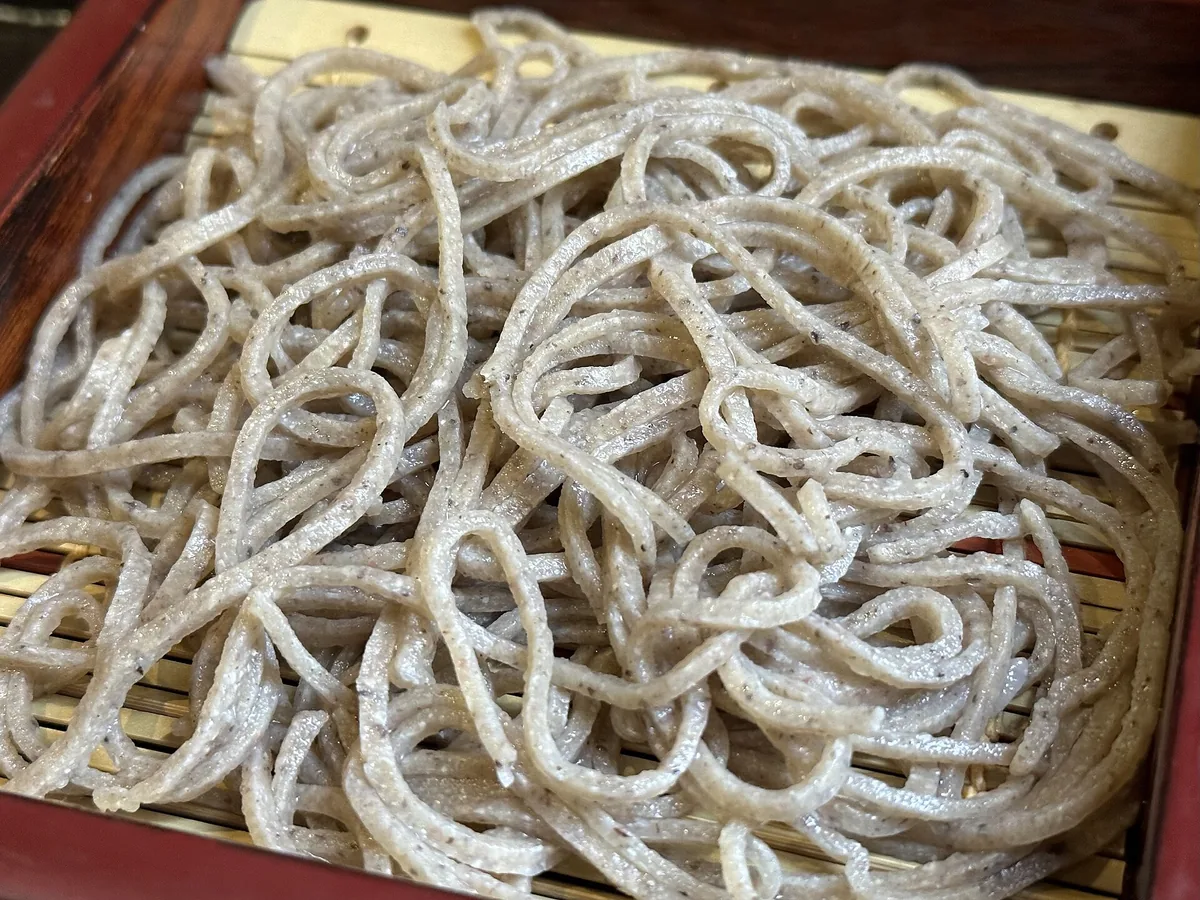
Order seiro or zaru – cold noodles on a slatted bamboo tray, with a cup of tsuyu dipping broth, spring onion and wasabi on the side. Hot soba in broth exists and is fine, but heat flattens buckwheat aroma, and aroma is the entire reason to come to a shop that mills its own.
Then, in order. First, eat two or three strands with nothing at all. That is the taste of the buckwheat and the reason the place is recognised: faintly sweet, faintly nutty, slightly rough on the tongue. Second, dip the bottom third only into the tsuyu. The broth is concentrated and drowning the noodle is the single most common mistake; the soba should carry a little of it, not be soaked in it. Add the wasabi to the noodle rather than stirring it into the broth.
Slurp. Not for show – pulling air in with the noodle aerates it across the palate, which is exactly how a wine taster does it, and cold soba genuinely tastes different when you do. It is also why eating quietly is not the polite option here.
Finish with the sobayu. At the end a small pot of cloudy water arrives: this is the starchy water the noodles were boiled in. Pour it into whatever tsuyu is left in your cup and drink it as a thin soup. It is the intended last course, it is the traditional close to a soba meal, and most foreign visitors leave it untouched on the table.
What makes a soba house serious
Three things separate a restaurant like this from the standing soba counters in train stations, and all of them are visible if you know to look.
Milling. Buckwheat loses aroma very quickly after it is ground, which is why the best shops stone-mill their own on the premises rather than buying flour. This is the single biggest determinant of how a bowl of soba tastes and it is invisible on the plate.
Ratio. Soba dough is buckwheat plus a binder, usually wheat flour, because pure buckwheat has no gluten and will not hold. The common ratio is eight buckwheat to two wheat, and the higher the buckwheat proportion the more fragile the noodle and the more skill required. A short, slightly brittle noodle is a sign of ambition, not of failure.
Finite production. A hand-cut shop makes what it can make. When it is gone, service ends, whatever the posted time says. This is why arriving at the start of a service matters more here than at almost any other kind of restaurant, and why a mid-afternoon plan to ‘drop in’ is a plan to find it shut.
Fitting it into the day
The location is useful. It sits in the quiet residential lanes a few minutes from Omotesando, which means it combines naturally with the Nezu Museum and its garden, ten minutes away, and with Meiji Jingu at the other end of Omotesando.
A good structure for the day: the shrine forest first thing, soba at the start of the lunch service, the Nezu garden in the afternoon, and Shibuya after dark. That is one of the better days in Tokyo and none of it involves a train.
For the other Bib Gourmand entries here, see Nakiryu for ramen and Tonkatsu Hinata for pork cutlet.
Frequently asked questions
What are Tamawarai's opening hours?
We do not publish them. Michelin does not list them, and hand-cut soba houses commonly close when the day's dough is finished regardless of any posted time. Check on the day and arrive early in a service.
What should I order at Tamawarai?
Cold seiro or zaru soba. Taste two or three strands plain before you dip anything, then dip only the bottom third of the noodle into the broth.
What is the cloudy water served at the end?
Sobayu, the starchy water the noodles were cooked in. Pour it into the remaining dipping broth and drink it. It is the intended final course of a soba meal.
Is it rude to slurp soba?
The opposite. Drawing air in with the noodle spreads the aroma across the palate and is how soba is meant to be eaten. Silent eating is the odd behaviour in a soba house.
Do I need a reservation?
Treat it as a walk-in and arrive at the start of a service. The limiting factor is the quantity of dough made that day rather than the number of tables.
Further reading
Official sources
- MICHELIN Guide – Tamawarai – Listing and distinction; no opening hours published
- MICHELIN Guide – soba in Tokyo – The guide's own soba selection for Tokyo
- MICHELIN Guide – Tokyo Bib Gourmand – Tokyo region Bib Gourmand selection