Nakiryu
Writes the route pages and owns the fare data behind them. Re-checks every segment on a quarterly sweep.
UpdatedThis page carries dated prices or seasonal forecasts checked on the date above, and that window has now passed. Re-check the sources at the foot of the page before you book anything.
Nakiryu is a small counter in Minami-Otsuka that holds a Michelin Bib Gourmand – the guide’s mark for good cooking at a moderate price – and it is one of the handful of ramen shops in the world with that kind of recognition.
We are not going to print its opening hours. Michelin does not publish them, small ramen shops in Tokyo change them frequently, and a wrong time in a guide is how people end up outside a shuttered door having crossed the city. What we can tell you is everything else: what to order, what the queue does, and how the ticket machine works.
At a glance
- Distinction
- Michelin Bib Gourmand – good cooking at a moderate price
- Order
- Tantanmen, the sesame and Sichuan pepper bowl it is known for; shoyu ramen if you want to see the technique without the chilli
- Hours
- Not published by Michelin, and we will not invent them. Check on the day, and expect a lunch service and an evening service with a break between
- Paying
- A ticket machine at the door. Cash is the safe assumption
- Getting there
- Shin-Otsuka on the Marunouchi Line, or Otsuka on the Yamanote Line
In this guide
What to order, and why it tastes like that
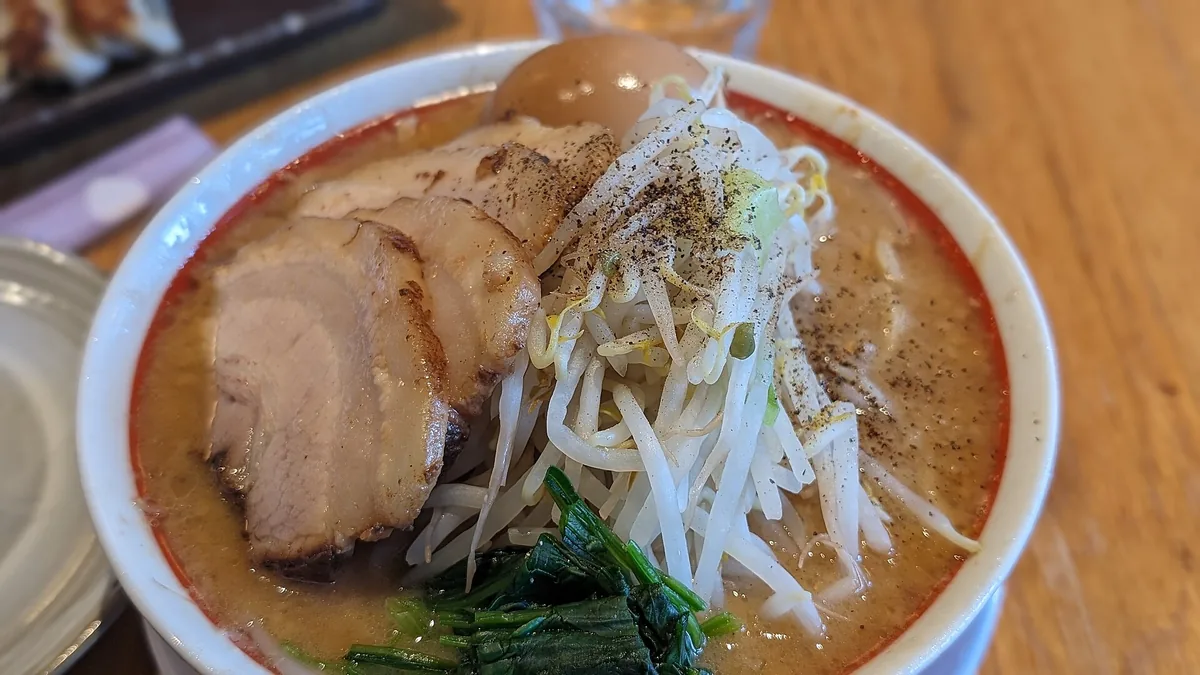
Order the tantanmen. It is the reason the shop is known and the reason it was recognised. Tantanmen is the Japanese descendant of Sichuan dan dan noodles, and the Japanese version is soupier, richer and built on sesame; Nakiryu’s is unusually deep, with a properly emulsified sesame base, minced pork, and enough Sichuan pepper to produce the numbing tingle rather than simple heat.
The balance is the thing. A lot of tantanmen is either bland sesame paste or an assault. This one is neither: the chilli is present and the pepper is distinct from it, and you can still taste the stock underneath both. Ask for it without the chilli oil if you are heat-averse and it is still an excellent bowl.
The shoyu ramen is the other thing to know about. It is a clear, restrained soy-based bowl and it is the one to order if you want to understand why the kitchen is taken seriously – the technique is more exposed with nothing to hide behind. Regulars often order one of each between two people.
Add the ajitama, the marinated soft-yolk egg. Add wontons if they are on the machine. Skip the rice.
The queue, and how to handle it
Expect to queue. The counter seats roughly ten and turnover is fast, but the line commonly forms before opening and can run an hour at peak. A queue here is normal and orderly: you join the end, you do not leave a bag to hold your place, and when you reach the door you buy your ticket from the machine and wait to be seated.
The way to shorten it is to go at an unfashionable time. The end of a lunch service, or the first half hour of an evening one on a weekday, are meaningfully quieter than 12:30 on a Saturday. Because we cannot responsibly print the service times, the practical instruction is to check on the day and then aim for the edges of whatever they are.
The ticket machine. Insert cash, press the button for your bowl and any extras, take the tickets and your change, and hand the tickets over at the counter. Buttons are Japanese with some English; the top-left button is conventionally the shop’s signature bowl, which here is what you want. Bring notes and coins – assuming a card will be accepted at a counter of this kind is how people end up apologising in a queue.
Eat and go. There is no lingering culture at a ramen counter with ten seats and forty people outside, and finishing in fifteen minutes is the polite norm rather than a rush.
Where it sits in Tokyo ramen
Tokyo has a genuine claim to be the ramen capital of the world, and the Michelin Bib Gourmand list here is unusually long for a category of food that costs under a thousand yen a bowl. Nakiryu sits alongside a small number of shops recognised on that list, and no ramen shop currently holds a Michelin star.
If you are building a ramen itinerary rather than a single meal, the useful contrast is with tsukemen, the dipping style that was invented in this city, and with the fuller account of it on the Rokurinsha page. Otsuka itself is an unremarkable Yamanote Line stop that happens to have this in it, so plan the trip around the meal rather than the other way round.
For the other two Bib Gourmand counters on this site, see Tamawarai for soba and Tonkatsu Hinata for pork cutlet.
Frequently asked questions
What are Nakiryu's opening hours?
We do not publish them, because Michelin does not and small ramen counters change them often. Check on the day rather than trusting a figure written months earlier.
Does Nakiryu have a Michelin star?
No. It holds a Bib Gourmand, which is Michelin's mark for good cooking at moderate prices. No ramen shop currently holds a star.
What should I order at Nakiryu?
The tantanmen, which is what the shop is known for. The shoyu ramen is the better order if you want to judge the kitchen's technique, and two people can sensibly take one of each.
Do I need to book at Nakiryu?
No, and you cannot. It is a counter with a ticket machine and a queue. Go at the edge of a service rather than the middle of it.
Does Nakiryu take cards?
Assume not. Payment is by ticket machine at the door and cash is the safe assumption at a ramen counter of this size.
Further reading
Official sources
- MICHELIN Guide – Sosakumenkobo Nakiryu – Bib Gourmand listing; no opening hours are published
- MICHELIN Guide – Tokyo Bib Gourmand ramen – The full Bib Gourmand ramen list for Tokyo
- MICHELIN Guide – Tokyo Bib Gourmand – Tokyo region Bib Gourmand selection