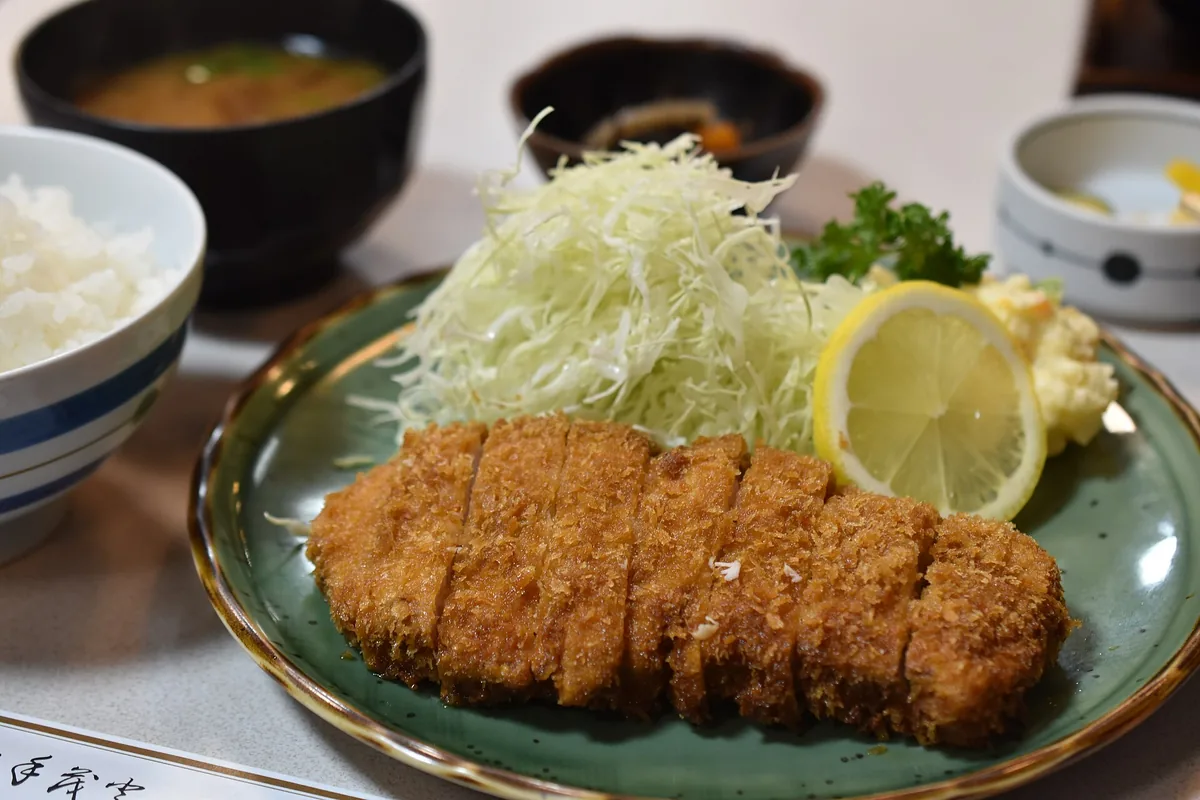
Tonkatsu Hinata
Writes the route pages and owns the fare data behind them. Re-checks every segment on a quarterly sweep.
UpdatedThis page carries dated prices or seasonal forecasts checked on the date above, and that window has now passed. Re-check the sources at the foot of the page before you book anything.
Tonkatsu Hinata is a small counter in the Takadanobaba end of Shinjuku ward with a Michelin Bib Gourmand for its pork cutlet. That is a serious distinction for a dish most visitors think of as cheap lunch food, and it is the most affordable way to eat at Michelin-recognised level anywhere in Tokyo.
As with the other Bib Gourmand counters on this site, Michelin does not publish its opening hours, and we are not going to invent a time for a shop that can change its service without telling anyone. Check on the day. What follows is the part that does not change: what tonkatsu is, why a good one is difficult, and what to order.
At a glance
- Distinction
- Michelin Bib Gourmand
- Order
- Rosu (loin) if you want fat and flavour, hire (fillet) if you want lean. Ask which pork is on that day
- Hours
- Not published by Michelin. Small fried-food counters set their own hours and change them; check on the day
- Getting there
- Takadanobaba, on the JR Yamanote, Tozai and Seibu Shinjuku lines
- Budget
- Moderate – a Bib Gourmand means good cooking at a sensible price, and Takadanobaba is a student district
In this guide
Why good tonkatsu is difficult
A pork cutlet is breadcrumbs, pork and oil, and there is nowhere to hide. Four things separate a cutlet worth crossing Tokyo for from the one in a station food court.
The pork. Serious shops buy named breeds from named farms and change supplier with the season, and they will tell you which pork is on if you ask. The fat is the point: a good loin cutlet has a clean white seam of fat along one edge that should taste sweet rather than greasy.
The crumb. Fresh, coarse, hand-torn panko rather than the fine dry commercial kind. It should sit on the meat as a distinct layer, not fuse to it, and it should shatter rather than crunch.
The frying. Low and slow, often twice, at a lower temperature than instinct suggests, so that the interior cooks to the point where the pork is just set and still pink-tinged while the crust stays pale gold. Rushing this gives you a brown crust and a dry interior, which is what most tonkatsu is.
The rest. A fried cutlet needs to sit before it is cut, or the juices run out onto the plate. If your cutlet arrives promptly and perfectly dry beneath, someone is doing this right.
How to order and eat it
The two cuts are rosu, the loin, with the fat seam, and hire, the fillet, lean and finer-grained. Rosu is the one to order if you want to taste why people care about tonkatsu; hire is the better choice if fat bothers you. Some counters offer both in one set, which is the diplomatic answer.
It comes as a teishoku: cutlet, a mound of finely shredded raw cabbage, rice, miso soup and pickles. The cabbage refill is usually free and asking for one is entirely normal. It is not garnish; the raw cabbage is there to cut the fat and it does.
On the table there will be a pot of thick brown tonkatsu sauce, and often a small mortar of sesame seeds to grind before you pour the sauce in. There may also be salt, and at a shop of this level the correct move is to try the first piece with salt only. The sauce is good and it is also a mask; the salt tells you what the pork actually tastes like.
Mustard on the side is karashi, and it is considerably hotter than it looks. A small amount on one corner of a slice is enough.
Practicalities
Expect a queue and expect no reservations. Counters like this seat a dozen or so, turn over quickly, and manage demand with a line rather than a booking system. The lunch peak is the worst time and the edges of a service are the best.
Bring cash. Many small Tokyo counters take cards now, but the ones that do not are exactly this kind, and it is not a situation you want to discover at the end of a meal.
Takadanobaba is a student district built around Waseda University, which keeps prices down across the whole neighbourhood and makes it a good place to eat generally. It is four stops from Shinjuku on the Yamanote Line, which makes this a workable lunch before an evening in Golden Gai. For the other Bib Gourmand counters here see Nakiryu and Tamawarai.
Frequently asked questions
What are Tonkatsu Hinata's opening hours?
We do not publish them, because Michelin does not and small counters change them without notice. Check on the day and avoid the middle of the lunch peak.
Does Tonkatsu Hinata have a Michelin star?
No. It holds a Bib Gourmand, Michelin's distinction for good cooking at a moderate price.
Should I order rosu or hire?
Rosu, the loin, if you want the full flavour, since the fat seam is where most of it lives. Hire, the fillet, if you prefer lean meat. Ask which pork is being used that day.
How should I eat tonkatsu at a good shop?
Try the first piece with salt alone before touching the sauce, grind the sesame if a mortar is provided, and use the free cabbage refill to cut the richness.
Can I book a table?
Assume not. Counters of this size run on queues rather than reservations, and cash is the safe assumption for payment.
Further reading
Official sources
- MICHELIN Guide – Tokyo tonkatsu restaurants – The guide's tonkatsu selection for Tokyo
- MICHELIN Guide – Tokyo Bib Gourmand – Tokyo region Bib Gourmand selection
- MICHELIN Guide – new Bib Gourmands, Tokyo 2026 – The 2026 Bib Gourmand announcement