Shinjuku

Writes the logistics pages. Works to one rule: a price comes from the company that charges it.
UpdatedThis page carries dated prices or seasonal forecasts checked on the date above, and that window has now passed. Re-check the sources at the foot of the page before you book anything.
Shinjuku is four districts wearing one name, and the most useful fact about it is a free one: the Tokyo Metropolitan Government Building has two observatories at 202 metres that cost nothing. No ticket, no booking, a bag check and a lift. Visitors regularly pay ¥2,000 and upwards elsewhere for a comparable view and never learn this one exists. Its opening hours and closing days are set by the Metropolitan Government and do change, so confirm them for your date rather than trusting a figure in a guide.
The other useful fact is defensive. Shinjuku station has around two hundred exits and handles more passengers than any station in the world. Getting the wrong one puts you fifteen minutes and one large building away from where you meant to be.
At a glance
- Free view
- Tokyo Metropolitan Government Building observatories, 202 metres, no ticket. Hours and closing days are set by the Metropolitan Government and change – check before going
- Green space
- Shinjuku Gyoen, a paid national garden, closed Mondays
- Nightlife
- Kabukicho, Golden Gai and Omoide Yokocho, all within ten minutes of the east exit
- The station
- Around 200 exits and five operators. Allow serious time for any transfer
- Cash
- Golden Gai and Omoide Yokocho are cash-first. Bring notes
In this guide
West side, east side
The west side is the skyscraper district: the Metropolitan Government Building, the big hotels, Kenzo Tange’s twin towers, and wide windy plazas. It is where the free view is, it is orderly, and it empties in the evening. The Park Hyatt of Lost in Translation is here.
The east side is the one people mean by Shinjuku: department stores, Kabukicho, Golden Gai, Omoide Yokocho, and the Godzilla head on top of the Toho building. It is denser, louder and where every evening plan here should start.
South is Shinjuku Gyoen, a 58-hectare national garden that was an imperial garden before that and a daimyo estate before that. It charges admission, it closes on Mondays, and it is worth both. It holds Japanese, English and French formal gardens on one site, over a thousand cherry trees with an unusually long flowering season because of the variety mix, and a greenhouse. It is the only quiet place in Shinjuku.
East again is Shin-Okubo, Tokyo’s Koreatown, ten minutes on foot, which is where to eat if the Shinjuku prices annoy you.
Golden Gai and the cover charge question
Golden Gai is six narrow alleys of roughly two hundred tiny bars, most seating five to eight people, in two-storey wooden buildings that survived the redevelopment of everything around them. It is the best thing in Shinjuku and it comes with a rule that causes more bad feeling than it should.
A cover charge of ¥500 to ¥1,500 is normal here, and it is charged to Japanese customers too. It is not a tourist surcharge and it is not a scam. A bar with six seats cannot survive on drink margin alone, and the charge is what keeps the door open. Ask at the door before you sit down – every bar will tell you, and many post it – and treat a bar that will not tell you as one to walk past.
Two more rules. Bring cash: many of these bars do not take cards. And do not photograph inside, or into open doorways. The alleys are private roads and the association asks for permission for street filming; inside a six-seat bar, a camera is simply rude.
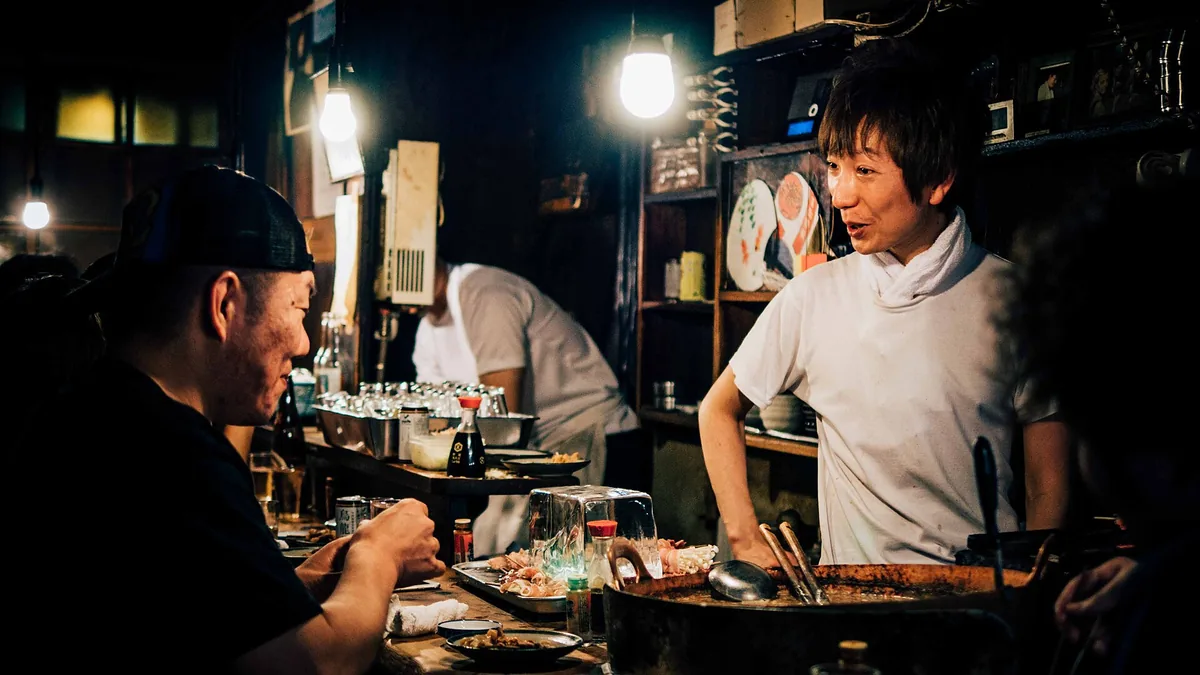
Omoide Yokocho, on the other side of the station, is the same physical idea applied to food – a lane of yakitori counters thick with charcoal smoke, cheap and open late. No cover charge tradition there, and a good place to eat before Golden Gai rather than after.
Surviving the station
Five operators use Shinjuku: JR, Odakyu, Keio, Tokyo Metro and Toei. They have separate concourses, separate gates and separate ticket machines, and the passages between them are long. The workable approach is to learn three exits and ignore the rest: East for Kabukicho and the bars, West for the skyscrapers and the free view, and South for Shinjuku Gyoen, the bus terminal and the Odakyu line to Hakone.
The Shinjuku Expressway Bus Terminal above the south exit is where the long-distance and airport buses go from, and it is the single easiest thing in the station to find.
Note that JR East raised fares on 14 March 2026 by around 7.8 per cent, its first revision in thirty-nine years, so pre-2026 fare figures for anything JR out of Shinjuku are low. IC cards are the answer: sales restrictions ended on 1 March 2025 and Suica and PASMO are freely sold again. A Welcome Suica has no deposit and lasts 28 days, but its remaining balance is not refundable, so load it in small amounts.
Frequently asked questions
Is there a free observation deck in Shinjuku?
Yes. The Tokyo Metropolitan Government Building has two observatories at 202 metres and they are free. Opening hours and closing days are set by the Metropolitan Government and change, so check them for your date.
Are Golden Gai cover charges a scam?
No. A charge of ¥500 to ¥1,500 is standard and is charged to Japanese customers as well. Ask before you sit down, bring cash, and do not photograph inside the bars.
Which Shinjuku exit do I need?
East for Kabukicho, Golden Gai and the shops; West for the skyscrapers and the free observatories; South for Shinjuku Gyoen and the expressway bus terminal. The station has around 200 exits, so pick one of those three and follow it.
Is Shinjuku Gyoen worth the entry fee?
Yes. It is 58 hectares with three distinct garden styles, over a thousand cherry trees with a long flowering season, and it is the only genuinely quiet space in the district. It closes on Mondays.
Do I need cash in Shinjuku?
For the small bars of Golden Gai and the yakitori counters of Omoide Yokocho, yes. The department stores and chains take cards and IC cards without difficulty.
Further reading
Official sources
- GO TOKYO – Shinjuku – Official area guide, including the Metropolitan Government Building observatories
- Shinjuku Golden Gai association (official) – The alleys are private roads and street filming needs permission
- JR East – Welcome Suica – No deposit, 28 days, balance not refunded
- JR East – fare revision application (press release, PDF) – The revision implemented on 14 March 2026