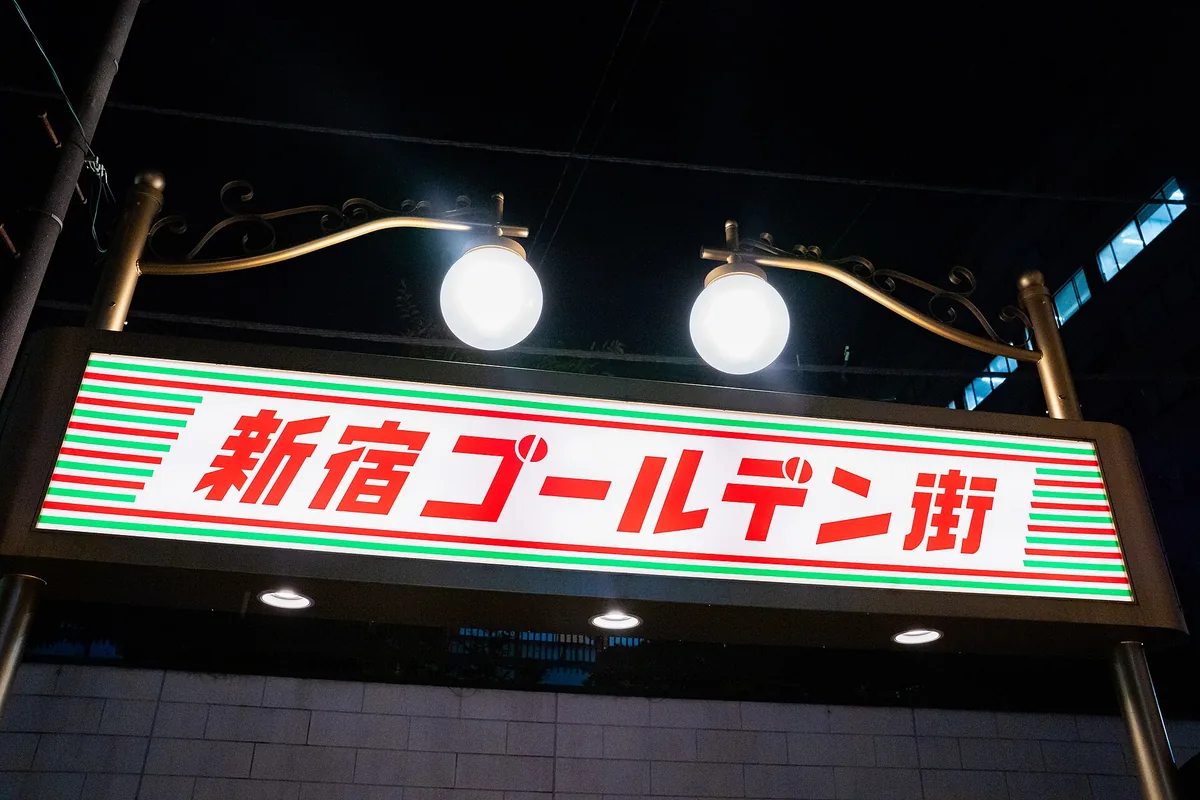
Golden Gai

Writes the logistics pages. Works to one rule: a price comes from the company that charges it.
UpdatedThis page carries dated prices or seasonal forecasts checked on the date above, and that window has now passed. Re-check the sources at the foot of the page before you book anything.
Golden Gai is six alleys of tiny wooden buildings behind Kabukicho, holding around two hundred bars, most of which seat five to eight people. It survived the post-war redevelopment of everything around it and it is one of the last pieces of that Tokyo standing.
It also generates more complaints from foreign visitors than any other part of Tokyo nightlife, and nearly all of them come from one misunderstanding. A cover charge of ¥500 to ¥1,500 is normal here. It is charged to Japanese customers too. It is not a tourist scam. Understand that before you go in and the district becomes what it actually is, which is wonderful.
At a glance
- Cover charge
- ¥500–1,500 is normal, is charged to Japanese customers too, and is how a six-seat bar survives. Ask at the door before you sit
- Cash
- Bring notes. Many bars do not take cards
- Photography
- The alleys are private roads and the association requires permission for street filming. Inside a bar, do not photograph at all
- Size
- Six alleys, roughly 200 bars, most seating five to eight people
- Timing
- Most bars open in the evening and run late. Before about 21:00 is the best chance of a seat
In this guide
Why the cover charge exists
Do the arithmetic from the owner’s side. A bar with six seats, open five hours a night, might serve twenty people in an evening on a good night. The rent on a two-storey building in central Shinjuku does not care that the building is small. There is no volume to make margin on, so the charge for occupying a seat is the business model – it is called otoshi or seki-ryo and in many bars it comes with a small snack.
This is a long-standing Japanese custom and it applies across the country, from izakaya to hotel bars. It is not applied to foreigners and not to Japanese. What is true is that Japanese customers know to expect it and visitors do not, which is why it reads as a sting when the bill arrives.
So ask. Stand at the door and ask what the charge is before you sit down. Every honest bar will tell you straight away and a great many post it in English on the door. A bar that will not give you a number is the one to walk past – and there are a hundred and ninety-nine others.
Budget accordingly: with the cover and a drink, assume ¥1,500 to ¥2,500 per bar. Two bars in an evening is the normal pattern and roughly ¥4,000 a head is a realistic figure. That is not expensive for what it is, but it is not the cheap night out people sometimes expect.
Choosing a bar, and getting in
Every bar here has a theme and a regular clientele. There are punk bars, jazz bars, film bars, a bar for people who like a specific manga, bars run by the same person for forty years. Many have a handwritten sign in English saying whether newcomers are welcome; some say members only, and that is a genuine statement rather than a pose.
Look for: a door that is open or has a welcome sign, a posted charge, and space. Walk on from: a full bar, a members-only sign, or a tout on the street trying to steer you somewhere. Touting is not the Golden Gai way and anyone doing it is not representing a bar you want.
Once inside, you are in someone’s front room. Greet the master or mama, order a drink rather than studying a list, and talk to whoever is next to you, because at a six-seat counter there is no other option and that is the entire attraction. One drink and moving on is completely normal and nobody is offended.
Do not photograph inside. The alleys themselves are private roads and the association requires permission for street filming; a camera inside a six-seat bar, pointed at strangers drinking, is simply unacceptable. Ask first if you want a picture of the bottles.
Practicalities, and what is nearby
Cash. Many of these bars have no card terminal and no interest in getting one. Draw money before you arrive; the convenience-store ATMs around Shinjuku station take foreign cards.
Time. Most bars open in the evening and stay open very late. Between about 19:00 and 21:00 you have the best chance of finding seats; after midnight the district is at its most atmospheric and its most full.
Space. Groups of more than three are difficult and will usually be split. Go alone or in a pair for the best of it.
Eat first. Omoide Yokocho, on the other side of Shinjuku station, is the yakitori equivalent of this street and has no cover-charge tradition, so a plate of skewers there and drinks here is the standard Shinjuku evening. For the wider district, see Shinjuku; for the opposite end of Tokyo drinking, Bar Benfiddich is a few minutes west and Virtù is across town.
Frequently asked questions
Is the Golden Gai cover charge a tourist scam?
No. A charge of ¥500 to ¥1,500 for a seat is a standard Japanese practice, is charged to Japanese customers as well, and is how a bar with six seats pays central Shinjuku rent. Ask the amount at the door before you sit down.
How much should I budget for Golden Gai?
Around ¥1,500 to ¥2,500 per bar including the cover and one drink, so roughly ¥4,000 a head for the usual two-bar evening.
Can I take photos in Golden Gai?
Not inside the bars. The alleys are private roads and the association requires permission for street filming, and photographing customers in a six-seat bar is not acceptable. Ask the master first if you want a picture of the room.
Do Golden Gai bars take cards?
Many do not. Bring cash; convenience-store ATMs around Shinjuku station accept foreign cards.
Can I go to Golden Gai in a group?
Not easily. Most bars seat five to eight people, so groups of more than three will be split up. It is at its best alone or in a pair.
Further reading
Official sources
- Shinjuku Golden Gai association (official) – Association site; the alleys are private roads and street filming requires permission
- GO TOKYO – Shinjuku – Official area guide covering the Kabukicho bar districts
- GO TOKYO – spot directory – Tokyo Convention and Visitors Bureau listings