Rokurinsha
Writes the route pages and owns the fare data behind them. Re-checks every segment on a quarterly sweep.
UpdatedThis page carries dated prices or seasonal forecasts checked on the date above, and that window has now passed. Re-check the sources at the foot of the page before you book anything.
The most common mistake with Rokurinsha is treating it as one restaurant. It is not. The Osaki main shop and the Tokyo Station Ramen Street branch are separate outlets, they keep different hours, and a great deal of the advice online silently mixes the two. Someone quoting an early closing time is usually describing one of them to a person heading for the other.
We do not print hours for either, because they are set independently and changed without notice. Check the branch you are actually going to, on the day you are actually going. What does not change is the bowl, and the bowl is one of the most influential in modern Japanese cooking.
At a glance
- The two shops
- The Osaki main shop and the Tokyo Station Ramen Street branch are different outlets with different hours. Advice about one does not apply to the other
- Hours
- Set separately by each outlet and changed without much notice. Check the specific branch you intend to visit on the day
- Order
- Tsukemen – thick noodles served cold beside a hot, dense dipping broth
- Queue
- The Tokyo Station branch queues at almost every service. Ramen Street is in the basement on the Yaesu side
- Paying
- Ticket machine. Carry cash
In this guide
What tsukemen is, and what this one does
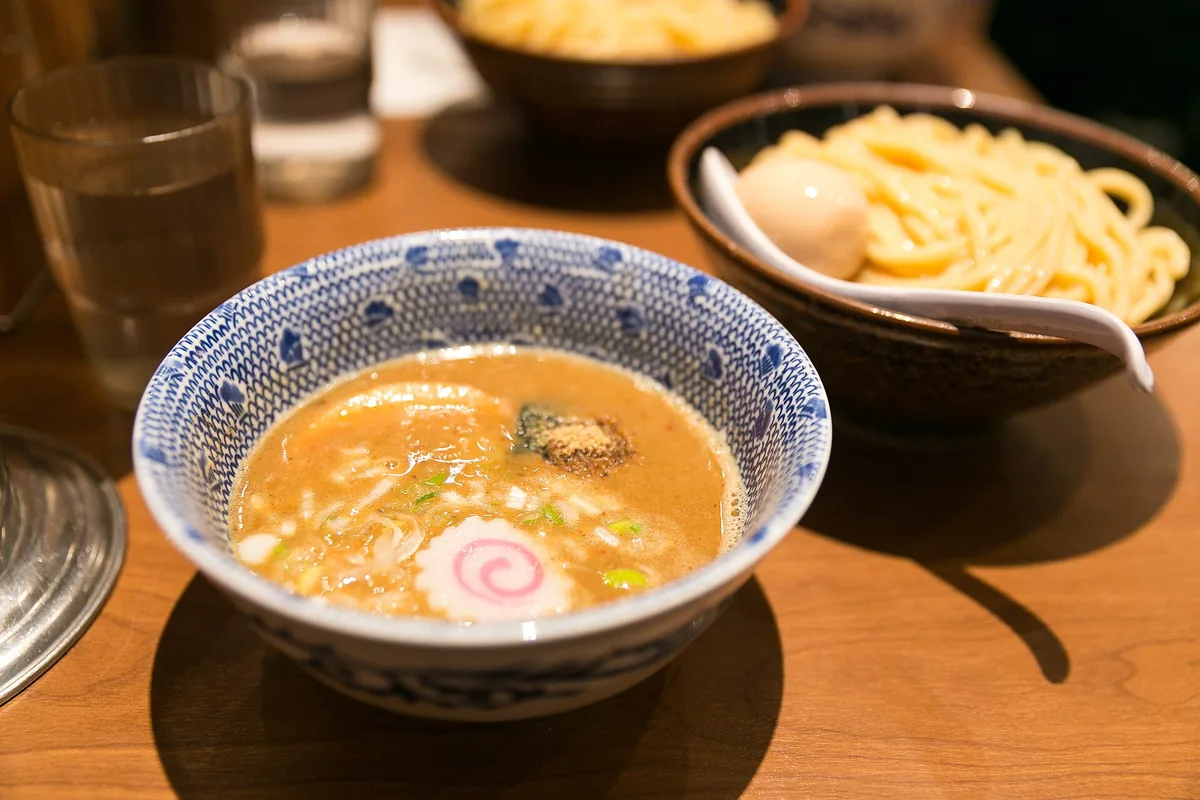
Tsukemen separates the noodles from the soup. You get a bowl of thick noodles, cooked and then rinsed cold, and a second smaller bowl of very concentrated hot broth. You dip a few strands at a time and eat them, and the noodle stays firm throughout the meal instead of softening in soup.
Rokurinsha’s broth is a dense gyokai-tonkotsu: pork bone stock combined with dried fish – typically bonito and sardine powder – reduced to something closer to a sauce than a soup, with a marine depth behind the pork. It is thick enough to cling to the noodle, which is the whole design. The noodles are fat, chewy and deliberately cold, and the temperature contrast is the point.
This style is what a large part of Tokyo tsukemen now imitates, and Rokurinsha is one of the shops that made it the default. Order the standard tsukemen on your first visit rather than a variant.
Finish with soup-wari. When the noodles are gone, hand the dipping bowl back and ask for soup-wari; the counter will thin the remaining broth with hot stock so you can drink it. It is included, it is expected, and it is the intended end of the meal. Most foreign visitors leave without it.
The Tokyo Station branch, and how to use it
Tokyo Ramen Street is a basement corridor of ramen shops on the Yaesu side of Tokyo Station, inside the station complex. Rokurinsha is the one with the long queue; it has been the anchor tenant of the corridor since it opened and it is the reason a lot of people know the street exists at all.
The practical value of this branch is that it converts dead time into a good meal. If you have an hour before a Shinkansen, this is a considerably better use of it than the platform bento. The queue is real – commonly thirty to sixty minutes at peak – so judge it against your departure rather than your appetite, and do not join it with twenty minutes to spare.
Finding it is the other difficulty. Tokyo Station is enormous and Ramen Street is in the First Avenue Tokyo Station basement on the Yaesu side, not the Marunouchi side. If you come out of the restored red-brick facade, you are on the wrong side of the station and have a ten-minute walk through it.
The Osaki main shop is the original and the one purists prefer, a short ride south on the Yamanote Line. It is a destination rather than a convenience, and the queue there is made of people who came specifically.
Ordering, paying and what else is on the street
Buy from the ticket machine before joining the queue or as directed by staff, then hand the ticket over at the counter. Cash is the safe assumption. Extras worth having are the marinated egg and, if you are hungry, the larger noodle portion – which usually costs nothing extra and must be requested when you order, not afterwards.
Tokyo Ramen Street has around eight shops and they are deliberately different from each other: miso, shoyu, a vegan option and more. If the Rokurinsha queue is impossible, the corridor is not a consolation prize.
Tokyo Station is a ten-minute walk from the Imperial Palace East Gardens – which close on Mondays and Fridays – and is the obvious lunch stop on that morning. For the history of the dish, see tsukemen; for the other end of Tokyo ramen, Nakiryu.
Frequently asked questions
Are the Rokurinsha shops the same?
No. The Osaki main shop and the Tokyo Station Ramen Street branch are separate outlets with separately set opening hours. A lot of online advice conflates them, which is how people arrive at a closed door.
What are Rokurinsha's opening hours?
They differ by branch and change without much notice, so we do not print them. Check the specific outlet you are going to on the day you are going.
Where is Tokyo Ramen Street?
In the First Avenue Tokyo Station basement on the Yaesu side of Tokyo Station. The Marunouchi side, with the restored red-brick facade, is the wrong side and is a ten-minute walk away.
What is soup-wari?
Hot stock added to your leftover dipping broth at the end of the meal so you can drink it. Hand the bowl back and ask. It is included and it is the intended finish.
How long is the queue at Rokurinsha?
Commonly thirty to sixty minutes at peak times at the Tokyo Station branch. Judge it against your train departure rather than your hunger.
Further reading
Official sources
- GOOD LUCK TRIP – Rokurinsha, Tokyo Ramen Street – Branch details for the Tokyo Station outlet
- GO TOKYO – spot directory – Tokyo Convention and Visitors Bureau listings
- The Japan Times – how Tokyo's deconstructed ramen became a national favourite – Background on tsukemen's origins and spread