Asakusa
Writes the route pages and owns the fare data behind them. Re-checks every segment on a quarterly sweep.
UpdatedThis page carries dated prices or seasonal forecasts checked on the date above, and that window has now passed. Re-check the sources at the foot of the page before you book anything.
Asakusa is the low, old, eastern Tokyo that survived by being rebuilt, and it runs on two clocks that do not line up. Senso-ji’s main hall opens at 06:00, 06:30 from October to March, and the grounds never close at all. The Nakamise shops do not open until about 09:30.
Everything anyone says about Asakusa – that it is magical, that it is a tourist trap – is a report from one side or the other of that gap. Both are accurate. You get to choose which one you visit, and the choice costs nothing except getting up.
At a glance
- Getting there
- Asakusa station on the Ginza, Toei Asakusa, Tobu Skytree and Tsukuba Express lines – four separate Asakusa stations, a short walk apart
- Free view
- Eighth-floor terrace of the Asakusa Culture Tourist Information Center, opposite Kaminarimon, open to 22:00
- Best hours
- 06:00–09:00 for the temple, after dark for the floodlighting
- Avoid
- 11:00–16:00 on Nakamise, which is the densest tourist crush in Tokyo
- Time needed
- Half a day, or two hours done well
In this guide
How the district is actually laid out
Four stations are called Asakusa and they are not the same place. The Ginza Line and Toei Asakusa Line stations sit by Kaminarimon at the southern end; the Tobu Skytree Line terminus is beside the river, and is the one to use for Nikko; and Tsukuba Express Asakusa is a good six or seven minutes north-west of the others, which surprises people carrying luggage.
From Kaminarimon, Nakamise runs due north for about 250 metres to the temple. Crossing it halfway is Dempo-in Street, running east to west, which has the old shopfronts, the ninja on the roof, and about a quarter of the foot traffic. West of that is Hoppy-dori, two lines of open-fronted izakaya that start serving in the afternoon and are as cheap as central Tokyo gets.
East is the Sumida river, the Azuma-bashi bridge, the Asahi building with the golden flame on it, and the water bus pier for Odaiba and Hama-rikyu. Across the water, fifteen minutes on foot, is Tokyo Skytree. Ten minutes west is Kappabashi, the kitchenware street, which is where restaurants buy their knives and where the plastic food models are made.
A day that works
06:00. Kaminarimon with nobody under it, an empty Nakamise, incense at the main hall, and the seventeenth-century Asakusa-jinja beside it, which survived the 1945 firebombing when almost nothing else did.
08:00. Breakfast. The old cafes around Dempo-in do a proper morning set – thick toast, egg, coffee – for well under a thousand yen.
09:30. Kappabashi, before the crush arrives, for knives and for the wax food. Then the free eighth-floor terrace at the tourist information centre opposite Kaminarimon for the view back up Nakamise with Skytree behind it.
Afternoon. Either cross the river to Skytree and the Solamachi mall, or take the water bus downstream. Hoppy-dori from about four, and monjayaki or tempura for dinner.
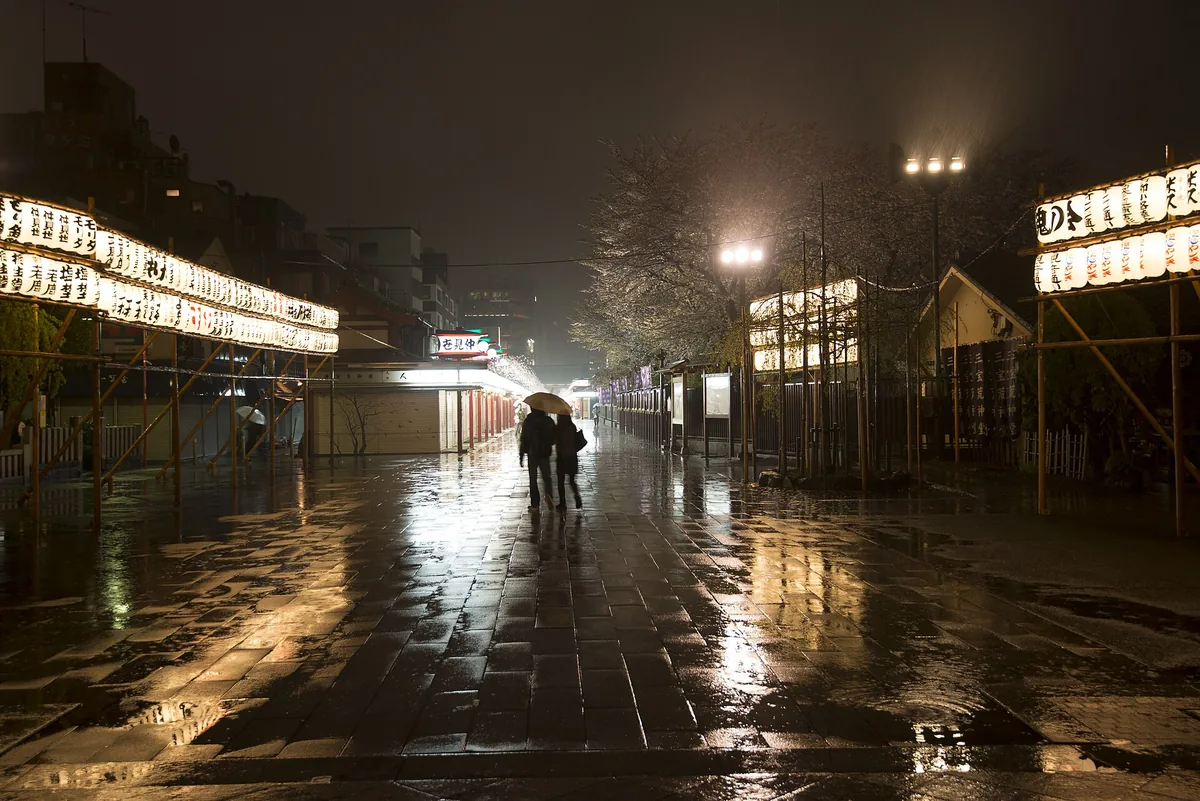
After dark. Back to the temple. It is floodlit, the hall is shut but the grounds are open, and the pagoda against a black sky is the photograph everyone is trying to take at noon with three hundred people in the frame.
The honest bits
Nakamise is not a scam but it is a souvenir street, and its prices reflect its address. The things genuinely worth buying there are the freshly made ones eaten on the spot – ningyo-yaki sponge cakes, age-manju, senbei grilled in front of you. The keyrings are the same keyrings as everywhere else. Eating while walking is frowned on here and several stalls ask you to stand aside and finish before moving on; it is a genuine local request, not a formality.
Rickshaw rides are real businesses with published rates, and the pullers speak good English and give a genuinely good short tour. Agree the price and the duration before you get in, because the rate is per person per period, not per ride.
Kimono rental shops are everywhere and most are perfectly decent; the thing to check is whether the price includes dressing and hair, and what time you must return. A same-day return deadline of 17:30 removes the evening from your plan, which is the best part of Asakusa.
Two dates fill the district completely: Sanja Matsuri in May and the Sumida fireworks in July. Both are worth planning around and neither is worth stumbling into.
Frequently asked questions
What time should I go to Asakusa?
Before 09:00 or after dark. The temple opens at 06:00 and the Nakamise shops at about 09:30, and those three hours are the quietest and most atmospheric time in the district.
Which Asakusa station should I use?
Ginza Line or Toei Asakusa for Kaminarimon, Tobu Skytree Line for trains to Nikko, and Tsukuba Express for the north-west of the district. The Tsukuba Express station is a good six minutes from the others.
Is there a free viewpoint in Asakusa?
Yes, the eighth-floor terrace of the Asakusa Culture Tourist Information Center opposite Kaminarimon. It is free, open until 22:00, and gives you Nakamise, the temple and Skytree in one frame.
How long do you need in Asakusa?
Two hours covers the temple, Nakamise and the free terrace. Half a day lets you add Kappabashi, the river and an early dinner on Hoppy-dori.
Is Asakusa a tourist trap?
Nakamise between eleven and four, largely yes. The same streets at seven in the morning, and the side lanes at any hour, are one of the best neighbourhoods in Tokyo. The complaint is about timing rather than about the place.
Further reading
Official sources
- GO TOKYO – Asakusa – Official Tokyo Convention and Visitors Bureau area guide
- Asakusa Tourism Federation – Local federation, events and shop listings
- Asakusa Culture Tourist Information Center – Taito City – The free eighth-floor observation terrace
- Senso-ji (official) – Temple history and annual events