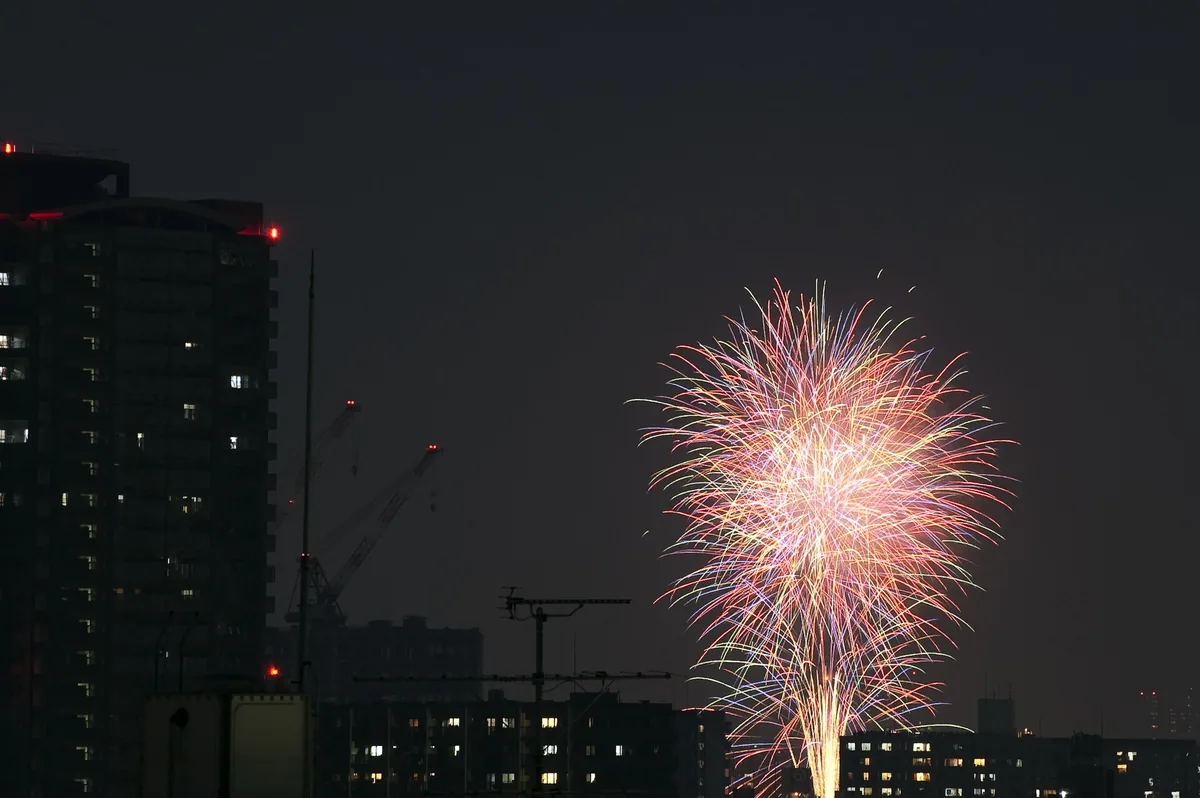
Sumida River Fireworks

Writes the autumn colour pages and follows the forecasts as they are issued, which is more than one forecast.
UpdatedThis page carries dated prices or seasonal forecasts checked on the date above, and that window has now passed. Re-check the sources at the foot of the page before you book anything.
The Sumida River Fireworks Festival is held on Saturday 25 July 2026, from 19:05 to 20:30. It is free, it is the oldest fireworks festival in Tokyo – descended from a 1730s river display – and it draws a crowd usually estimated at around a million people.
The 2027 date has not been published. It is conventionally the last Saturday in July, but that is a pattern rather than a commitment, and we would rather leave the line blank than print something a reader might book flights around.
At a glance
- 2026 date and time
- Saturday 25 July 2026, 19:05 to 20:30
- 2027
- Not yet published. The festival is conventionally held on the last Saturday of July, but we will not print a date the organisers have not confirmed
- Cost
- Free to watch from the street. Paid viewing seats and restaurant packages are sold separately by third parties
- Two sites
- The display is launched from two locations along the river and they run simultaneously on slightly different programmes
- Weather
- Postponement or cancellation is decided close to the day and announced by the organisers
In this guide
Two sites, one evening
The display is launched from two separate sites along the Sumida, a short distance apart, running at the same time on slightly different programmes. The first site traditionally includes a competition section in which pyrotechnic companies show new work, and it is generally the more interesting of the two if you care about the fireworks themselves rather than the volume.
Around twenty thousand shells go up over roughly ninety minutes, which is a rate that does not let up. The signature Japanese form is the warimono, the perfectly spherical burst that looks identical from every angle – a technically difficult thing that Japanese makers have specialised in for centuries, and the reason Japanese fireworks are distinctive rather than merely large.
Tokyo Skytree stands behind the river, which gives the best-known composition of the evening and also explains why every accessible vantage point on that side is occupied by mid-afternoon.
Where to watch, and when to arrive
The honest position first: the good free spots on the riverbank are taken by early afternoon, and large sections of the bank are closed off or made one-way for crowd control from late afternoon. If you turn up at 18:30 expecting to find a space on the water, you will spend the evening in a slow-moving crowd looking at other people’s heads.
Commit early. Take a position on the riverbank in the early afternoon with food, water and something to sit on, and treat the wait as part of the day. This is what most Japanese groups do and it is by far the best experience.
Or go further out. The shells burst high enough to be visible from a considerable distance. Parks, bridges and open ground well back from the official area give you a view with a fraction of the crush, and you can leave when you want.
Or pay. Restaurants, hotels and cruise operators sell viewing packages, expensively and early. They are not a rip-off – what you are buying is a seat and a toilet – but book months ahead.
Leaving is the hard part. Asakusa and Oshiage stations are subject to entry restrictions immediately after the display and the queues run for a long time. Either leave fifteen minutes before the end, or walk twenty or thirty minutes to a station outside the controlled area and board there.
Practicalities, and the yukata question
It will be hot and humid. Late July in Tokyo runs into the mid-thirties with high humidity, and standing in a crowd for six hours in that is a genuine health consideration. Carry more water than you think, and note that the convenience stores in the area sell out.
Yukata – the light cotton summer kimono – is what a large proportion of the crowd wears, and visitors are welcome to. Rental shops in Asakusa do it for a modest sum; check the return deadline, because a shop closing at 18:00 is useless for a display that starts at 19:05.
Weather calls are made close to the day and announced by the organisers; heavy rain or high wind can postpone or cancel. Check on the morning rather than assuming.
The other date that fills this district is Sanja Matsuri in May. Both are free, both are worth planning for, and Skytree sells nothing on fireworks night that is better than a patch of riverbank.
Frequently asked questions
When are the Sumida River fireworks in 2026?
Saturday 25 July 2026, from 19:05 to 20:30.
When are the Sumida fireworks in 2027?
Not yet published. The festival is conventionally held on the last Saturday of July, but we will not print a specific 2027 date before the organisers confirm one.
Do I need a ticket?
No. Watching from the street and the riverbank is free. Paid seats, restaurant tables and cruises are sold separately and sell out months ahead.
What time should I arrive?
Early afternoon if you want a riverbank position. Large sections of the bank are closed or made one-way for crowd control from late afternoon, and by 18:30 the good free spots are long gone.
How do I get home afterwards?
Either leave fifteen minutes before the end, or walk twenty to thirty minutes to a station outside the controlled area. Asakusa and Oshiage are subject to entry restrictions immediately after the display.
Further reading
Official sources
- Asakusa Tourism Federation – Sumida River Fireworks, 25 July 2026 – The 2026 date and the 19:05 to 20:30 timing
- Asakusa Tourism Federation – Local federation listings and announcements
- GO TOKYO – Asakusa – Official area guide for the district