Okutan Kiyomizu

Writes the logistics pages. Works to one rule: a price comes from the company that charges it.
UpdatedOkutan is a yudofu house – simmered tofu, essentially one dish – in a garden a few minutes’ walk below Kiyomizu-dera. The Okutan name goes back to the seventeenth century at Nanzen-ji, and the Kiyomizu house is the second of the two.
Two honest caveats. It is closed on Thursdays. And it does not publish its opening hours or its prices as text on its own site, so we are not going to print numbers we cannot verify. Telephone before you plan around it, particularly in winter, when Kyoto’s tofu restaurants tend to close earlier than the listings suggest.
At a glance
- Signature dish
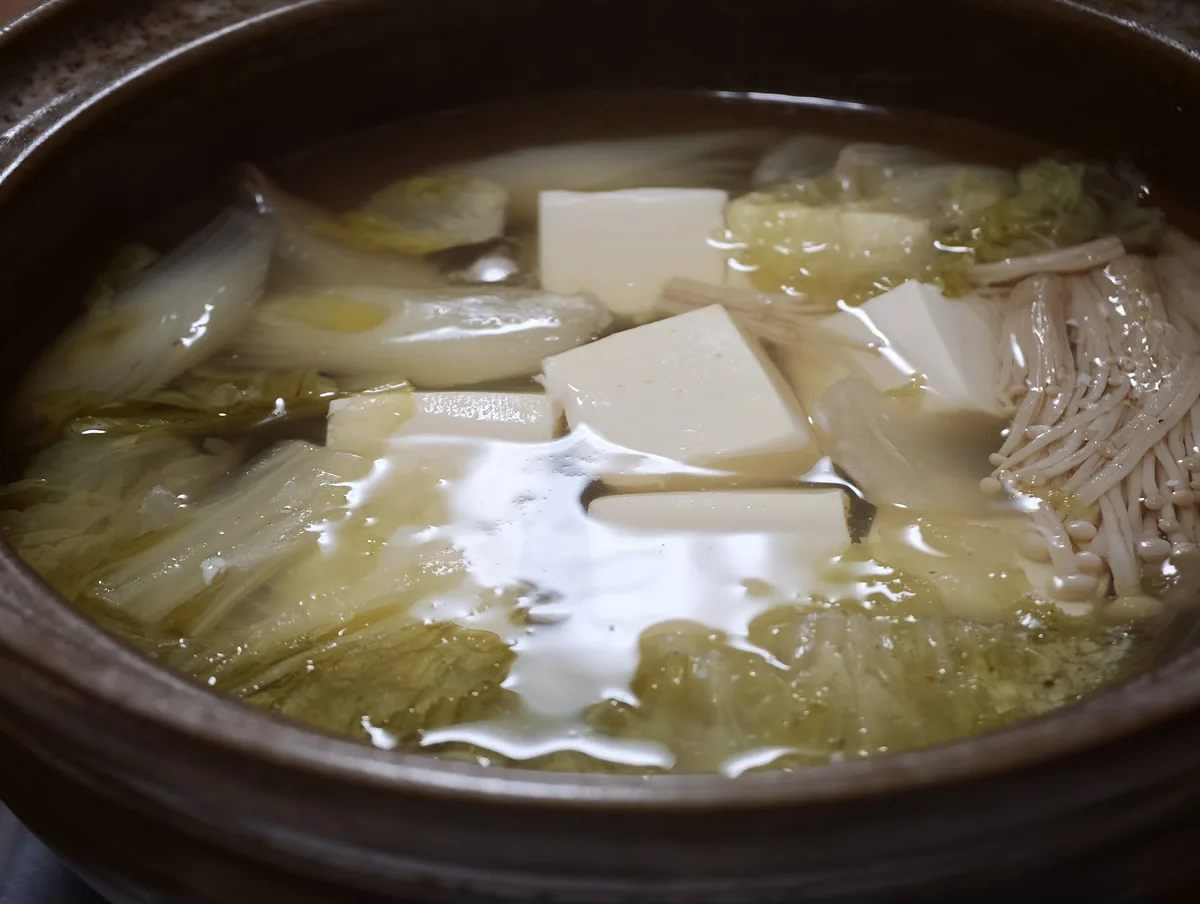
- Yudofu – blocks of tofu simmered in a kombu broth at the table
- Closed
- Thursdays
- Hours and prices
- Not published as text on the restaurant’s own site. Telephone ahead or ask at the door before building a day around it
- Where
- Kiyomizu 3-chome, a few minutes below Kiyomizu-dera on the Sannenzaka side
In this guide
What yudofu is, and why it is a Kyoto dish
Blocks of tofu, warmed in a shallow earthenware pot of water with a sheet of kombu in it, over a flame on the table. You lift a piece out, dip it in a soy-based sauce, and eat it with chopped spring onion, grated ginger and shichimi. There is no sauce on the dish itself and nothing is browned. That is the entire preparation.
It exists here because of two things Kyoto has: exceptionally soft groundwater, which makes good tofu, and a very large Buddhist establishment, which needed protein without meat. Tofu makers clustered around the big temples – Nanzen-ji, Kiyomizu-dera, the Daitoku-ji complex – and yudofu is the simplest thing their customers did with the product.
It is also a dish that divides visitors sharply. If you arrive expecting dinner, warm plain tofu in hot water is a disappointment. If you arrive understanding that the point is the texture and the sweetness of very good tofu, unmasked by anything at all, it is one of the most distinctive things you can eat in Japan. See yudofu for the longer version of that argument.
The restaurant
Okutan Kiyomizu sits behind a gate off the lanes, with a garden and pond and low tables looking onto it. The contrast with the approach to Kiyomizu-dera a few minutes uphill – which at midday is a solid column of people – is the main reason to come. You go through a gate and the noise stops.
Meals are built around the yudofu pot with accompanying dishes: tempura of seasonal vegetables, sesame tofu, dengaku with sweet miso, rice and pickles. It is a set rather than an ordering exercise, and it is vegetarian, which in a city where fish dashi is in everything makes it a genuinely useful address.
Do not come hungry after not eating all day. Yudofu is light by design and the portions are not generous in volume. Come after a dawn temple visit, eat slowly, and have soba later if you need it.
How to plan around it
The natural shape is: Kiyomizu-dera at 6:00 when it opens, an hour and a half on an almost empty hillside, then down through the lanes and into Okutan when it opens for lunch. By the time you sit down the temple above you is at full capacity and you have finished with it.
Because the restaurant does not publish its hours in a machine-readable way, the reliable approach is to ring on the morning you intend to go, or to walk past on the way up the hill and read the board at the gate. Both take two minutes and both are more trustworthy than a third-party listing.
If it is Thursday, go to the Nanzen-ji branch instead – a different, older house of the same family at the other end of Higashiyama, with its own closing day – or eat Izusen’s temple cuisine at Daitoku-ji, which is open every day of the year bar four.
Frequently asked questions
What day is Okutan Kiyomizu closed?
Thursdays.
What are the opening hours?
The restaurant does not publish its hours as text on its own site, and we will not print a figure we cannot verify. Telephone ahead, or read the board at the gate on your way up to the temple.
How much does it cost?
Prices are not published on the restaurant's own site. Ask when you arrive or when you telephone. It is a set-meal restaurant rather than an a la carte one.
Is yudofu vegetarian?
Yes. The dish is tofu simmered in water with kombu, and the accompanying courses at Okutan are vegetable-based. In a city where fish dashi is in almost everything, that makes it a genuinely useful option.
Is it worth going?
If you understand that yudofu is deliberately plain, yes – the garden setting a few minutes from one of the busiest temples in Japan is worth as much as the food. If you want a substantial meal, eat elsewhere.
Further reading
Official sources
- Okutan Kiyomizu – official online reservation – Booking page and location for the Kiyomizu house
- Kyoto Tourist Information Center – yudofu guide (PDF) – Kyoto City tourist office sheet on yudofu and the city’s tofu restaurants