Ace Hotel Kyoto
Writes the logistics pages. Works to one rule: a price comes from the company that charges it.
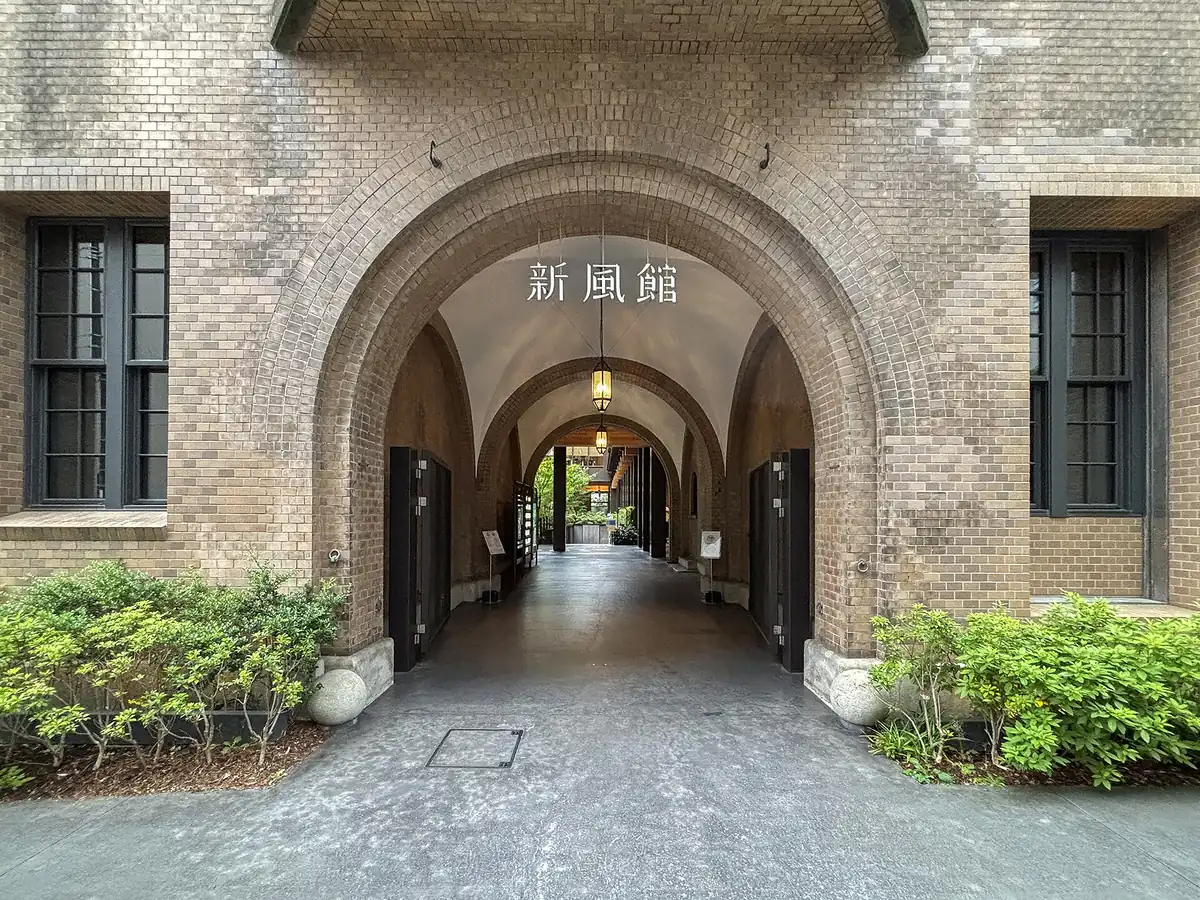
UpdatedAce Hotel Kyoto occupies the 1926 Kyoto Central Telephone Office, a Modernist brick and concrete building by Tetsuro Yoshida, remodelled by Kengo Kuma and opened as a hotel in 2020. It sits directly above Karasuma Oike station, where Kyoto’s two subway lines cross.
As with most international hotel groups, there is no published nightly rate – the price is quoted per date and swings hard between a wet Tuesday in February and the last week of November. Any article that gives you a number for this hotel is quoting one search on one day.
At a glance
- Rates
- Not published as a headline figure. Ace quotes per date through its booking system and rates move sharply with season
- Building
- The 1926 Kyoto Central Telephone Office by Tetsuro Yoshida, remodelled by Kengo Kuma and opened as a hotel in 2020
- Where
- Shinpukan, directly above Karasuma Oike station where the two subway lines cross
- Lodging tax
- Kyoto’s per-person lodging tax rose on 1 March 2026 to a top band of ¥10,000 per person per night. Check whether it is in your quote
In this guide
The building, and the bit that is free
Yoshida’s telephone exchange is a genuinely important piece of Japanese Modernism – brick arcading, a rhythm of tall windows, restraint everywhere – and the conversion keeps the original street elevation and much of the interior structure, adding a new block behind it.
The part worth knowing: the ground floor is open to anyone. Shinpukan, the complex the hotel sits inside, has a planted courtyard, a covered arcade, shops and several restaurants, and the hotel’s own lobby, café and gallery space run off it. You can walk in, sit down, and look at the building without being a guest. In a city where the Kyocera Museum also gives away its best public spaces, this is a good free half-hour.
Kuma’s contribution is the usual timber screening and layered light, applied more carefully than usual because the host building would punish anything heavier. The rooms mix American mid-century furniture with Japanese craft, which sounds like a brand exercise and mostly is, executed well.
Why the location beats everything
Kyoto’s transport is awkward. The subway is two lines in a cross and the buses are slow and crowded, and where you sleep therefore decides how much of your day you spend moving. Karasuma Oike is the one point where both subway lines meet.
From here: the Karasuma line runs south to Kyoto Station in five minutes and north to Kitaoji for Daitoku-ji and Izusen; the Tozai line runs east to Higashiyama for the Kyocera Museum and west to Nijo Castle, which is two stops. Nishiki Market and the Manga Museum are both a few minutes on foot.
That also matters for the 6:00 start at Kiyomizu-dera, which is the best crowd strategy in the city and which requires being able to get across Kyoto before the buses are useful. A taxi from here at half past five is a short one.
What it will actually cost
Two things sit on top of the room rate. The first is service. The second, and much larger since 1 March 2026, is Kyoto’s lodging tax, which was restructured that day into bands reaching ¥10,000 per person per night – the highest accommodation tax anywhere in Japan.
It is charged per person rather than per room, and the band depends on the per-person room rate, so a mid-range night here will sit well below the top band while a suite in November may not. The important point is that it is real money and that it is frequently quoted separately at check-in rather than included in the online figure.
Against the hostel end of the market, where the tax band is small, this is where the 2026 change bites hardest. It has not changed which hotel is good. It has changed the gap between them.
Frequently asked questions
How much is Ace Hotel Kyoto?
There is no published headline rate. Ace quotes per date through its own booking system and prices move sharply with season, peaking in the autumn colour weeks and at cherry blossom.
What building is it in?
The 1926 Kyoto Central Telephone Office by Tetsuro Yoshida, a significant piece of Japanese Modernism, remodelled by Kengo Kuma and opened as a hotel in 2020.
Can you visit without staying?
Yes. The Shinpukan complex the hotel sits in has a public courtyard, arcade, shops and restaurants, and the hotel lobby and cafe open off it. Walking in and looking at the building costs nothing.
Is the location good?
It is the best of any large hotel in Kyoto. It sits directly above Karasuma Oike, the only station where the city's two subway lines cross, with Nishiki Market and the Manga Museum a few minutes' walk away.
Does the new lodging tax apply?
Yes. Kyoto restructured its per-person lodging tax on 1 March 2026 into bands reaching ¥10,000 per person per night. The band depends on your per-person room rate, and the charge is often quoted separately at check-in.
Further reading
Official sources
- Ace Hotel Kyoto (official) – Property, rooms and booking. No published headline nightly rate
- South China Morning Post – Kyoto’s March 2026 lodging tax – The restructuring into bands reaching ¥10,000 per person per night