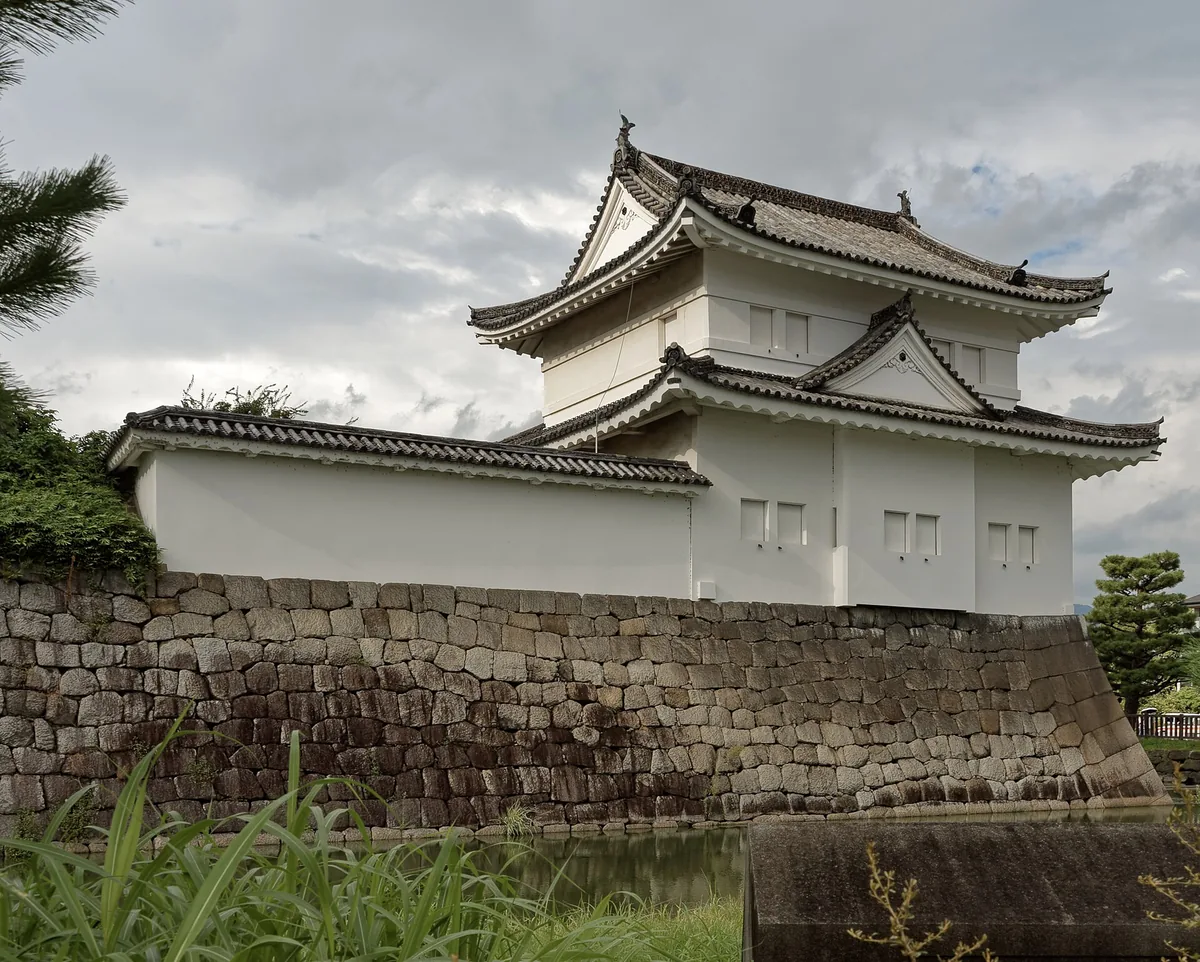
Nijo Castle

Writes the route pages and owns the fare data behind them. Re-checks every segment on a quarterly sweep.
UpdatedNijo Castle publishes ¥800 and that is the number that ends up in most guides. It buys the moat, the walls, the Karamon gate and the gardens. It does not buy the Ninomaru-goten, which is the reason to come.
The ticket you want is the combined one at ¥1,300. If you have already gone in on the ¥800 ticket you can add the palace for ¥500 at the information desk inside, so the mistake is recoverable – but the palace itself is not always open. Ninomaru-goten closes every Tuesday in January, July, August and December.
At a glance
- Admission
- ¥800 castle grounds only; ¥1,300 grounds plus Ninomaru-goten. Honmaru-goten is a further ¥1,000 and needs a web reservation
- Hours
- 8:45–17:00, last entry 16:00
- Closed
- Ninomaru-goten closes every Tuesday in January, July, August and December, and 26–28 December and 1–3 January. The castle closes 29–31 December
- Getting there
- Tozai subway line to Nijojo-mae, directly outside
In this guide
What the extra ¥500 buys
Ninomaru-goten is six connected buildings, thirty-three rooms, and some three thousand square metres of tatami, walked in stockinged feet on a fixed one-way route. It is a national treasure and the most complete surviving example of a shogun’s residential palace anywhere in Japan.
The sequence is the point. You move inward through waiting rooms of descending rank, each with wall paintings calibrated to the status of whoever was allowed to sit there – snarling tigers where provincial lords waited, quieter pine and heron further in. The Ohiroma audience hall at the centre is where, in 1867, Tokugawa Yoshinobu told the assembled lords he was returning power to the emperor. The building where the shogunate ended is still standing and you walk through it.
The corridors squeak underfoot – the uguisu-bari, or nightingale floors. Whether that was an intruder alarm or just the behaviour of old joinery is still argued about; either way, there is no way to cross the palace silently, and hearing four hundred visitors announce themselves is oddly the best part of the visit.
No photography inside. The castle grounds are fine.
The closure calendar, which is not simple
Three different schedules run at once and they catch people out constantly.
The castle is closed 29 to 31 December. Ninomaru-goten is closed 26 to 28 December, 1 to 3 January, and every Tuesday in January, July, August and December – four months, chosen because they are the quiet ones. Honmaru-goten, reopened after a long restoration, closes on the third Monday of each month and the following day.
So a Tuesday in August gets you an ¥800 castle whether you like it or not. If your Kyoto days are fixed and one of them is a Tuesday in one of those months, move Nijo to another day rather than paying for the grounds alone.
Is the grounds-only ticket ever worth it?
Rarely. The Ninomaru garden, laid out by Kobori Enshu, is genuinely good – a pond with three islands and a great deal of very deliberate rock – and the walk round the inner moat and up onto the Honmaru keep base gives you the only elevated view in central Kyoto that is not from a hotel. But ¥800 for that alone is poor value in a city where the Imperial Palace grounds are free.
The exception is cherry season. Nijo has around three hundred late-flowering trees and runs an evening illumination in spring, and the grounds at night are a different proposition from the grounds at two in the afternoon.
Practically: the Tozai subway drops you at Nijojo-mae outside the gate, last entry is 16:00 rather than 16:30, and the palace queue on a wet afternoon can add twenty minutes because everyone is taking their shoes off at the same door. Reckon on ninety minutes for the ¥1,300 visit.
Frequently asked questions
How much does Nijo Castle cost?
¥800 for the castle grounds, or ¥1,300 for the grounds plus Ninomaru-goten palace. If you buy the ¥800 ticket first you can add the palace for ¥500 at the information desk inside. Honmaru-goten is a separate ¥1,000 and requires an advance web reservation.
When is Ninomaru-goten closed?
Every Tuesday in January, July, August and December, plus 26 to 28 December and 1 to 3 January. The castle itself closes 29 to 31 December.
What are the nightingale floors?
The uguisu-bari corridors in Ninomaru-goten, which squeak as you walk on them. Whether that was designed as an intruder alarm or is simply how the joinery aged is still debated.
Can you take photographs inside the palace?
No. Photography is prohibited throughout Ninomaru-goten. The grounds, gardens and gates are unrestricted.
How long do you need at Nijo Castle?
About ninety minutes for the combined ticket – roughly forty-five minutes in the palace and the rest in the gardens and around the inner moat. Last entry is 16:00, earlier than most Kyoto sights.
Further reading
Official sources
- Nijo Castle – fees and tickets (official) – ¥800 grounds, ¥1,300 combined, ¥500 palace add-on, ¥1,000 Honmaru-goten
- Nijo Castle – visitor information (official) – 8:45–17:00 hours and the Ninomaru-goten and Honmaru-goten closure calendars