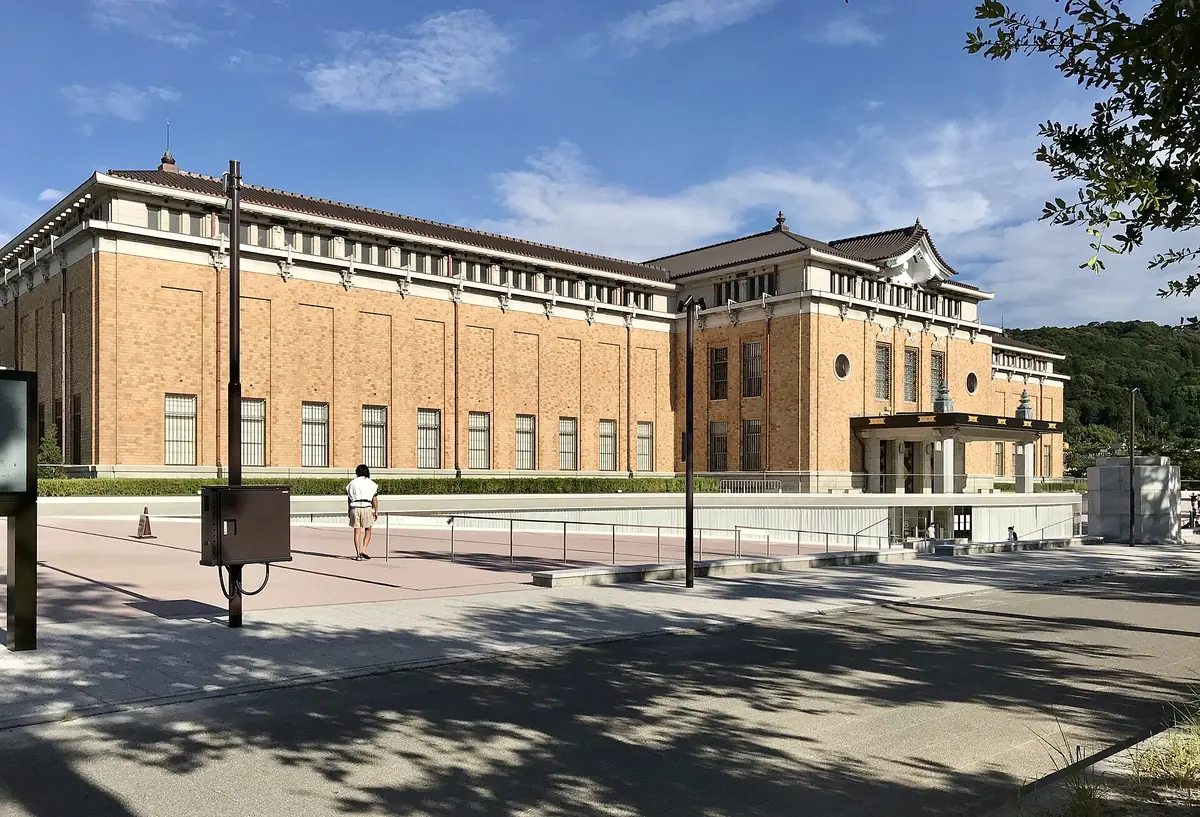
Kyoto City Kyocera Museum of Art
Writes the route pages and owns the fare data behind them. Re-checks every segment on a quarterly sweep.
UpdatedThe thing worth knowing about the Kyocera Museum is how much of it you can walk into without buying anything. The Central Hall, the sunken glass entrance, the roof terrace, the Japanese garden behind the building, the café and the shop are all free. The ticket applies to the Collection Room and to whatever special exhibition is running.
The Collection Room costs ¥730 if you live outside Kyoto and ¥520 if you live in the city – the museum is municipal and prices accordingly. Children of school age from outside Kyoto pay ¥300 and those living or studying in Kyoto go free.
At a glance
- Collection Room
- ¥730 for visitors from outside Kyoto, ¥520 for city residents, ¥300 for school students from outside the city and free for those living or studying in Kyoto
- Free to enter
- The Central Hall, the glass ribbon entrance, the roof terrace, the Japanese garden behind the building, the cafe and the shop
- Hours
- 10:00–18:00, last admission 17:30
- Closed
- Mondays, except public holidays, and 28 December to 2 January
In this guide
The building is the exhibit
This opened in 1933 as the Kyoto Municipal Museum of Art, built in the teikan style that put a tiled Japanese roof on a Western masonry box – a compromise the 1930s liked and very little of which survives. It is the second-oldest public art museum building in Japan and the symmetry, the coffered hall and the heavy staircases are all original.
The 2020 reopening, by Aoki Jun and Nishizawa Tezzo, did something unusually restrained with it. Rather than punching a new entrance through the 1933 façade, they excavated the forecourt and slid a curved glass ribbon in below the original ground level, so you now enter underneath the old building and come up inside it. The historic elevation is untouched and the museum gained a modern foyer. It is the best piece of adaptive reuse in Kyoto.
At the back, the Higashiyama Cube is a new wing for large shows, and above it a roof terrace looks east over the Okazaki canal to the enormous vermilion torii of Heian-jingu and the hills behind. That terrace costs nothing.
What the ¥730 gets you
The Collection Room draws on a municipal collection of some 3,900 works, overwhelmingly by artists of the Kyoto school – Takeuchi Seiho, Uemura Shoen, Tokuoka Shinsen and their circle – together with ceramics and modern crafts. It is rehung four times a year around a seasonal theme, so a spring visit and an autumn visit are genuinely different shows.
This is not a large or an exhausting display. Reckon on forty-five minutes. What it does well is give you Kyoto nihonga in Kyoto, in the building that was put up to hold it, which is a more coherent hour than the same paintings would be in Tokyo.
Special exhibitions in the Higashiyama Cube are ticketed separately and are often the reason to come – the programme runs to international names as well as Japanese ones. Check what is on before you decide which ticket you want; the Collection Room and the special exhibition are not the same purchase.
Where it sits, and when
The museum is in Okazaki, the museum and shrine quarter east of the centre, ten minutes on foot from Higashiyama subway station on the Tozai line. Heian-jingu, the National Museum of Modern Art and the zoo are all within a few minutes, and the south end of the Philosopher’s Path is about twenty minutes’ walk north.
Hours are 10:00 to 18:00 with last admission at 17:30 – an hour later than the temples close, which makes this a good late-afternoon stop rather than a morning one. It closes Mondays unless the Monday is a public holiday, and over the new year from 28 December to 2 January.
If you are visiting on Jidai Matsuri day, the procession forms up at Heian-jingu a few minutes away and Okazaki is closed to traffic. The roof terrace that afternoon is the best free seat in the district.
Frequently asked questions
How much is the Kyocera Museum?
The Collection Room is ¥730 for visitors from outside Kyoto and ¥520 for city residents, with school students paying ¥300 from outside the city and nothing if they live or study in Kyoto. Special exhibitions are ticketed separately.
What can you see without paying?
A great deal: the Central Hall, the glass ribbon entrance, the roof terrace overlooking Heian-jingu, the Japanese garden behind the building, the ENFUSE cafe and the museum shop are all outside the ticket barrier.
What days is it closed?
Mondays, except when the Monday is a public holiday, and 28 December to 2 January.
What are the opening hours?
10:00 to 18:00, with last admission at 17:30. Some special exhibitions set an earlier last-entry time, so check the exhibition page if you are arriving late.
Is it worth it if you do not know Japanese art?
Yes, but go for the building first. The 1933 teikan structure and Aoki Jun's 2020 underground entrance are the strongest reason to visit, and seeing them costs nothing at all.
Further reading
Official sources
- Kyoto City Kyocera Museum of Art – Collection Room, autumn 2026 (official) – ¥730 non-resident, ¥520 Kyoto resident, ¥300 school students, 10:00–18:00, closed Mondays
- Kyoto City Kyocera Museum of Art (official English site) – Opening hours, closure calendar and building history