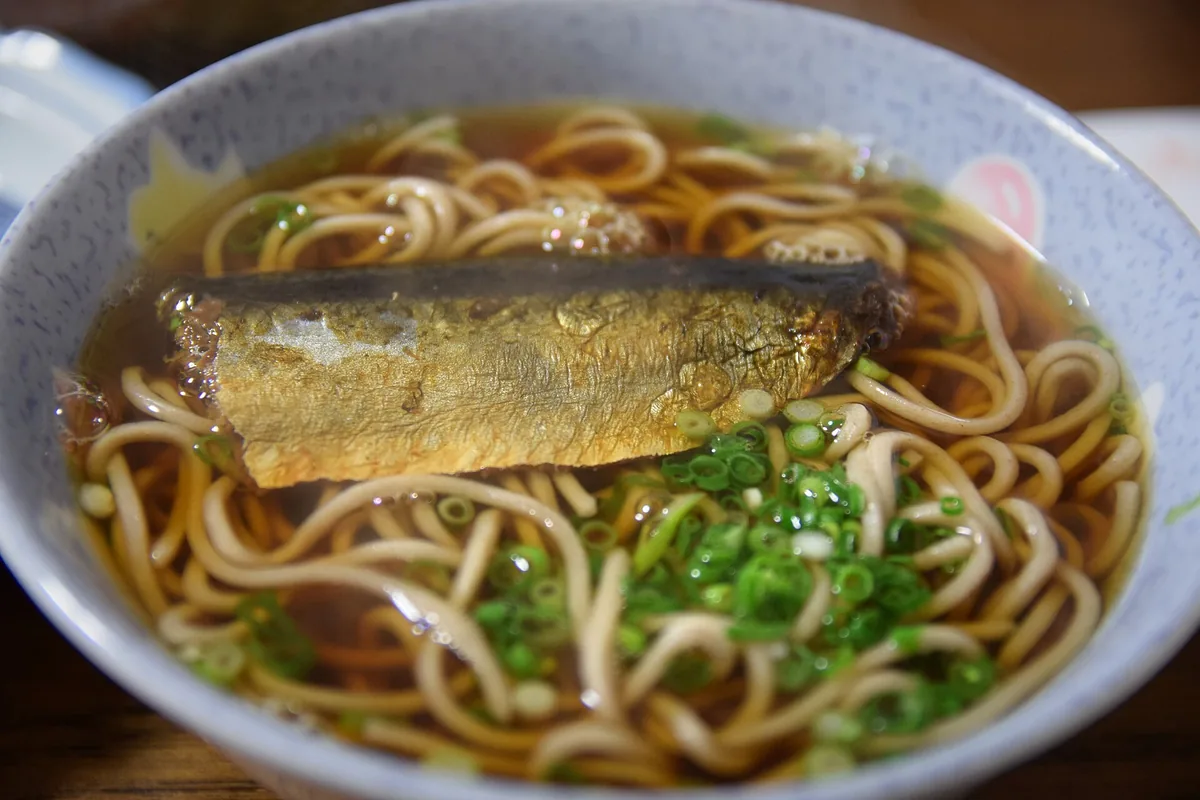
Nishin soba

Writes the logistics pages. Works to one rule: a price comes from the company that charges it.
UpdatedNishin soba is buckwheat noodles in dashi with a whole fillet of dried herring on top, simmered until it is dark, soft and sweet. It was invented at Matsuba, beside the Minamiza theatre at Shijo bridge, in 1882, and it still costs ¥1,650 there.
It exists because Kyoto is inland. The city is a basin ringed by mountains, forty kilometres from the sea in any direction, and until the twentieth century almost all the fish it ate arrived preserved. Nishin soba is what a landlocked city does with a box of dried herring, and it is probably the most characteristically Kyoto thing you can eat for under ¥2,000.
At a glance
- What it is
- Buckwheat soba in hot dashi, topped with a whole fillet of dried herring simmered slowly in soy, sake, sugar and mirin
- Where it began
- Matsuba, at the eastern end of Shijo bridge, in 1882
- Price
- ¥1,650 at Matsuba. Station and chain versions are cheaper and are not the same dish
- Season
- Eaten year round; traditionally the bowl eaten on new year’s eve in Kyoto
In this guide
The fish is the entire dish
Migaki-nishin is herring split, boned and dried until it is genuinely hard – closer to wood than to fish. It came south from Hokkaido in enormous quantities during the nineteenth century herring boom, it kept indefinitely, and it was cheap. Every Kyoto kitchen had some.
Turning it back into food takes two days. It is soaked in water, or in rice-washing water, for a day or more to rehydrate, then simmered very slowly in soy sauce, sake, sugar and mirin until it darkens and softens. Done properly the fillet gives under chopsticks and tastes sweet and deep rather than fishy. Done badly it is leathery and unpleasantly strong, and there is no middle ground.
The clever part is what happens in the bowl. The sweetened simmering liquid clinging to the fish bleeds slowly into the dashi, so the broth is one thing when it arrives and a richer, sweeter thing by the time you finish. Drink some early and some late.
The noodles, and why the broth is different here
Kyoto dashi is paler and lighter than Tokyo’s. Kansai broth is built on kombu with restrained katsuobushi and seasoned with usukuchi soy, which is paler and saltier than the dark soy used in the east, so the liquid stays almost golden. A Tokyo soba broth is brown and assertive; a Kyoto one is translucent.
That matters for this dish specifically. A strongly seasoned broth would fight the sweet simmered herring; the light Kansai version lets it come forward and then absorbs it. The dish does not work with an eastern broth, which is one reason it never really travelled.
The noodles themselves are unremarkable by the standards of a dedicated soba specialist. This is not a dish about hand-cut buckwheat and a careful flour ratio – for that, go to a soba-ya that sells nothing else. Nishin soba is a dish about the topping.
Where to eat it
Matsuba at Shijo Ohashi is the original, open 11:00 to 20:30 and closed Wednesdays and Thursdays – two days, which trips people up. No booking, quick turnover, and the most convenient position in Gion.
You will also find nishin soba at station counters and in chains for half the price. It is edible, and the fillet will have been bought in ready-simmered rather than made over two days. Given that the fish is the whole dish, that is a meaningful difference and the ¥800 saving buys you a different, lesser thing.
Timing: the 20:30 close at Matsuba makes this a good answer to the gap that ruins Kyoto evenings, when the temples shut between 16:30 and 17:00 and dinner is not for hours. Come down off Higashiyama at six and eat at the bridge. Nishin soba is also the traditional Kyoto toshikoshi-soba, eaten on new year’s eve, if you happen to be there for it.
Frequently asked questions
What is nishin soba?
Buckwheat noodles in a light Kansai dashi topped with a whole fillet of dried herring that has been rehydrated and simmered slowly in soy, sake, sugar and mirin until soft and sweet.
Where was nishin soba invented?
At Matsuba, beside the Minamiza theatre at the eastern end of Shijo bridge, in 1882. The restaurant was founded in 1861 and still serves the dish.
How much does it cost?
¥1,650 at Matsuba. Station counters and chains sell a version for roughly half that, using herring bought in ready-simmered rather than prepared over two days.
Why does Kyoto eat dried herring?
Because the city is inland, roughly forty kilometres from the sea in every direction, and until the twentieth century almost all its fish arrived preserved. Dried Hokkaido herring was cheap, kept indefinitely and became a staple.
Does the broth taste different from Tokyo soba?
Yes, markedly. Kyoto dashi is kombu-led and seasoned with pale usukuchi soy, so it stays almost golden rather than going brown. The light broth is what allows the sweet simmered herring to work.
Further reading
Official sources
- Sohonke Nishin-Soba Matsuba – directory listing – ¥1,650 nishin soba, 11:00–20:30, closed Wednesdays and Thursdays
- Kyoto City Central Wholesale Market – Matsuba – The 1861 founding and the 1882 creation of the dish