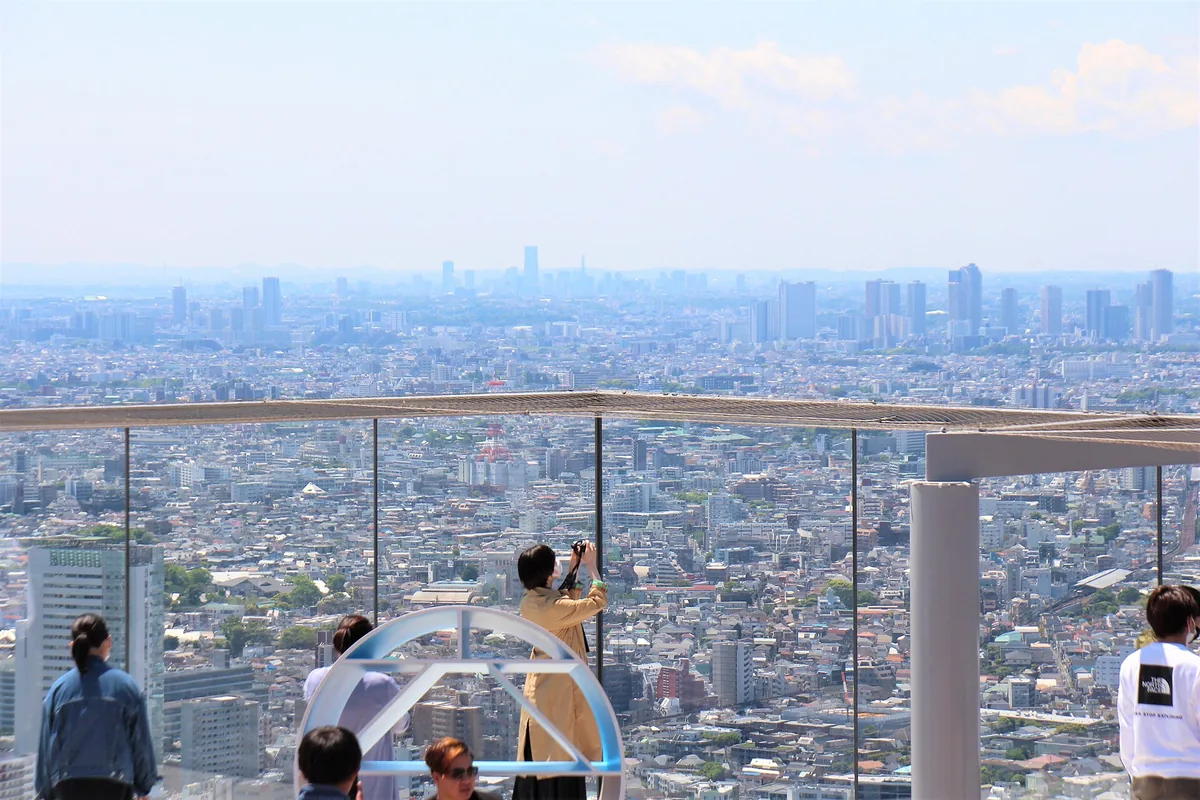
Shibuya Sky

Writes the logistics pages. Works to one rule: a price comes from the company that charges it.
UpdatedThis page carries dated prices or seasonal forecasts checked on the date above, and that window has now passed. Re-check the sources at the foot of the page before you book anything.
Shibuya Sky charges ¥2,700 online for an entry time before 15:00 and ¥3,400 from 15:00 onwards. The premium buys the sunset, and the sunset is genuinely the best thing here.
It is also the reason this page carries a warning rather than a recommendation. The rooftop is open to the sky, and it closes in rain or high wind – you are moved to the enclosed level below, which is a perfectly good indoor observation floor and is not what you paid the extra ¥700 for. There is no refund. A ¥3,400 sunset ticket bought for a day that turns out wet is, pound for pound, the worst-value ticket in Tokyo.
At a glance
- Admission
- ¥2,700 online for an entry time before 15:00; ¥3,400 online from 15:00 onwards
- Booking
- Timed entry, bought online; same-day tickets at the counter cost more when available
- Weather
- The open rooftop closes in rain or strong wind. The enclosed indoor level stays open, and there is no refund
- Getting there
- Shibuya Scramble Square, directly above Shibuya Station
- Time needed
- 60–75 minutes
In this guide
What the open roof gives you that nothing else does
Sky Stage is the roof of Shibuya Scramble Square at 229 metres, and it is open. No glass, no reflections, wind in your face. After the enclosed decks at Skytree and the Metropolitan Government Building, the difference is not marginal – being outdoors at that height changes the experience from looking at a view to standing in one.
The specific reason to be here rather than higher up elsewhere is what is directly below: the Scramble Crossing, seen from almost straight down, with the light cycles pulsing people across it every couple of minutes. Skytree is twice the height and shows you a grey field of city; Shibuya Sky is lower and shows you the single most legible piece of urban theatre in Japan. On a clear evening Fuji sits on the western horizon with the sun going down beside it.
The corner with the sloping lawn and the hammocks is where the queue forms for photographs. There is a staffed photo point and a limit on how long you get; the rest of the roof is free to wander and much less contested.
The weather arithmetic, and how to beat it
Tickets are date and time specific. The rooftop closure decision is made on the day by staff, on safety grounds, and is not negotiable or refundable. Tokyo’s rainy season runs roughly from early June to mid-July and the typhoon season from August into October, which between them cover a large part of the travel year.
Three ways to manage it, in order of how much they actually help:
Book late. Slots do sell out, especially sunset ones in autumn, but booking two or three days ahead rather than two or three weeks puts you inside a usable forecast.
Buy the daytime ticket. At ¥2,700 before 15:00 the same roof costs ¥700 less, the light is flatter but the city is clearer, and if it rains you have lost less. A clear midday is better than an overcast sunset at any price.
Have a fallback. If the roof is shut, the indoor level is still a strong view and the building is full of places to sit it out. Shibuya is not a place where a rained-off hour is a problem.
Rules, bags and what to wear
Nothing loose is allowed on the roof. Bags, hats, tripods and selfie sticks go into free lockers before you go up, because anything dropped from 229 metres over Shibuya Station is a serious matter. Phones are permitted and have to be held; phone straps are sold at the entrance for anyone who wants one.
It is cold up there. Wind at that height runs several degrees below street level and a Tokyo winter evening on an open roof is genuinely bracing. Bring a layer you would not otherwise carry.
Sunset slots fill first and the queue for the lift is at its longest about forty minutes before sunset. If you have a sunset ticket, arrive at the start of your window, not the middle of it, and get to the roof before the light goes. Afterwards, Shibuya is right there, and the walk north to Meiji Jingu is the other half of a good day – though the shrine will already be closed, since it shuts at sunset.
Frequently asked questions
How much is Shibuya Sky?
¥2,700 online for an entry slot before 15:00 and ¥3,400 online for a slot from 15:00 onwards. Same-day counter tickets cost more and are not always available.
What happens at Shibuya Sky if it rains?
The open rooftop closes and you are limited to the enclosed indoor level. There is no refund and no rescheduling, so the expensive sunset slot in poor weather is the weakest value ticket in the city.
Is Shibuya Sky better than Tokyo Skytree?
Different things. Skytree is far higher and enclosed, and reaches the horizon on a clear day. Shibuya Sky is lower, open to the air, and puts the Scramble Crossing directly beneath you.
Can you take a bag onto the Shibuya Sky roof?
No. Bags, hats, tripods and selfie sticks must go in the free lockers before you go up. Phones are allowed but must be held, and straps are sold at the entrance.
Should I book the sunset slot?
Only with a settled forecast. Sunset is the best time on the roof, but it costs ¥700 more and the roof is the first thing closed in rain or wind.
Further reading
Official sources
- SHIBUYA SKY (official) – Ticket prices, timed entry, rooftop closure and locker rules
- GO TOKYO – Shibuya – Tokyo Convention and Visitors Bureau area guide, listing SHIBUYA SKY
- TOKYO SKYTREE – tickets (official) – For the price comparison with the enclosed alternative