Den
Writes the route pages and owns the fare data behind them. Re-checks every segment on a quarterly sweep.
UpdatedThis page carries dated prices or seasonal forecasts checked on the date above, and that window has now passed. Re-check the sources at the foot of the page before you book anything.
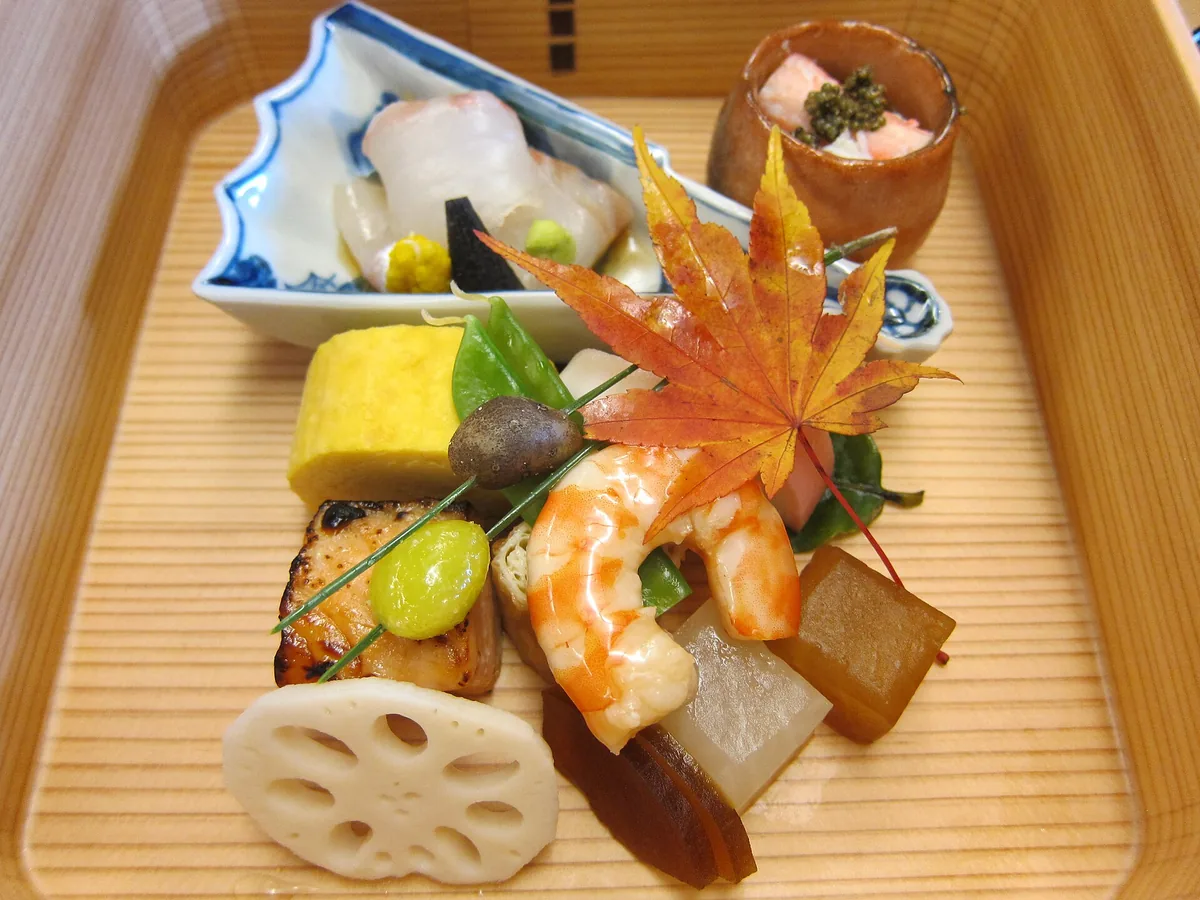
Den holds two Michelin stars and is, by some distance, the most enjoyable high-end restaurant in Tokyo. Zaiyu Hasegawa cooks kaiseki with the formality taken out and the technique left in, which in a cuisine that can be very solemn indeed turns out to be radical.
The obstacle is not the price, which is in line with any two-star restaurant in a major city. It is the booking. Michelin does not publish the opening hours, and we will not print any, but hours are not the problem – the problem is that reservations open on a fixed schedule and are gone within minutes of opening.
At a glance
- Distinction
- Two MICHELIN stars
- Format
- A set tasting menu at a counter and a small number of tables. Dietary requirements are accommodated if given in advance
- Hours
- Not published by Michelin. Dinner-led, and the restaurant confirms the sitting when it confirms the booking
- Booking
- Opens a fixed period ahead and closes within minutes. Assume you need a plan, not luck
- Budget
- Two-star Tokyo pricing, and the wine and sake pairing adds meaningfully to it
In this guide
What the cooking actually is
Kaiseki is the formal multi-course meal of Japanese haute cuisine: seasonal, sequenced, restrained, and traditionally consumed in near silence. Den keeps the seasonality and the technique and discards the solemnity. The result is a tasting menu that makes people laugh, which is not a sentence that gets written about two-star restaurants very often.
The two dishes that made the restaurant’s name have become fixtures. The ‘Dentucky Fried Chicken’ arrives in a small takeaway box with the kitchen’s own parody branding on it, and inside is a chicken wing stuffed with sticky rice and vegetables and fried. The salad is a bowl of twenty-odd vegetables and leaves, each prepared differently, arranged with a carrot carved into a small figure. Both are jokes and both are technically serious, which is the whole point.
The rest of the menu moves with the season and with what the kitchen has found. Expect a clear soup that demonstrates the dashi, a raw course, something grilled over charcoal, a rice pot finished at the counter, and a dessert that is usually more inventive than Japanese fine dining normally allows.
The hospitality, which is the actual subject
What Den is genuinely famous for among people who work in restaurants is not a dish. It is the service. The team remembers guests, adapts courses to what a particular table seems to want, and has a documented habit of researching diners in advance and producing something personal – a plate referencing where you are from, a garnish referencing your job.
This is a deliberate reworking of omotenashi, the Japanese idea of anticipatory hospitality, into something warm rather than ceremonial. Nobody is rigid, nobody hovers, and the chefs talk to the counter while they work. If you have found high-end Japanese dining intimidating before, this is the antidote.
Practically, this means tell them things. Allergies, dislikes, an anniversary, a first visit to Japan – the restaurant does something with that information. Turning up silent and anonymous gets you an excellent meal and misses the reason people come back.
Getting a table
Reservations open a set period in advance and are taken through the restaurant’s own channels. They go quickly – minutes rather than hours – so the workable approach is to know the exact date and time the window opens for your travel dates, be at a screen for it, and have a second choice of date ready.
Two other routes exist and both have caveats. A concierge at a good hotel – the Okura or Hoshinoya are the obvious examples – can sometimes place guests, and that is a genuine service rather than a favour. Third-party booking agencies charge a fee to do what you could do yourself, and their success rate is not obviously better than yours.
Do not build a trip around this table until it is confirmed. If it does not come off, Tokyo has more starred restaurants than any city on earth and a great many of them take bookings without drama – and the Bib Gourmand counters on this site are, for most visitors, the better story anyway.
Frequently asked questions
How many Michelin stars does Den have?
Two. It is one of the best-known two-star restaurants in Tokyo and is unusual among them for how informal the room feels.
What are Den's opening hours?
Michelin does not publish them and we will not guess. The restaurant confirms the sitting time when it confirms your booking, which is the only reliable source.
How do I get a reservation at Den?
Bookings open a fixed period in advance and are taken within minutes. Know exactly when the window opens for your dates and be ready. A good hotel concierge is the realistic alternative.
What is the Dentucky Fried Chicken?
A chicken wing stuffed with sticky rice and vegetables and fried, served in a parody takeaway box. It is a joke and a genuinely accomplished dish at the same time, which is the restaurant in one plate.
Can Den handle dietary requirements?
Yes, given notice. Tell them when you book rather than on the night, and tell them anything else relevant too, because the kitchen uses that information.
Further reading
Official sources
- MICHELIN Guide – Den, Tokyo – Two-star listing; no opening hours published
- MICHELIN Guide – Tokyo two-star restaurants – The current two-star selection for Tokyo
- MICHELIN Guide – Tokyo restaurants – Full Tokyo selection