Hoshinoya Tokyo
Writes the autumn colour pages and follows the forecasts as they are issued, which is more than one forecast.
UpdatedThis page carries dated prices or seasonal forecasts checked on the date above, and that window has now passed. Re-check the sources at the foot of the page before you book anything.
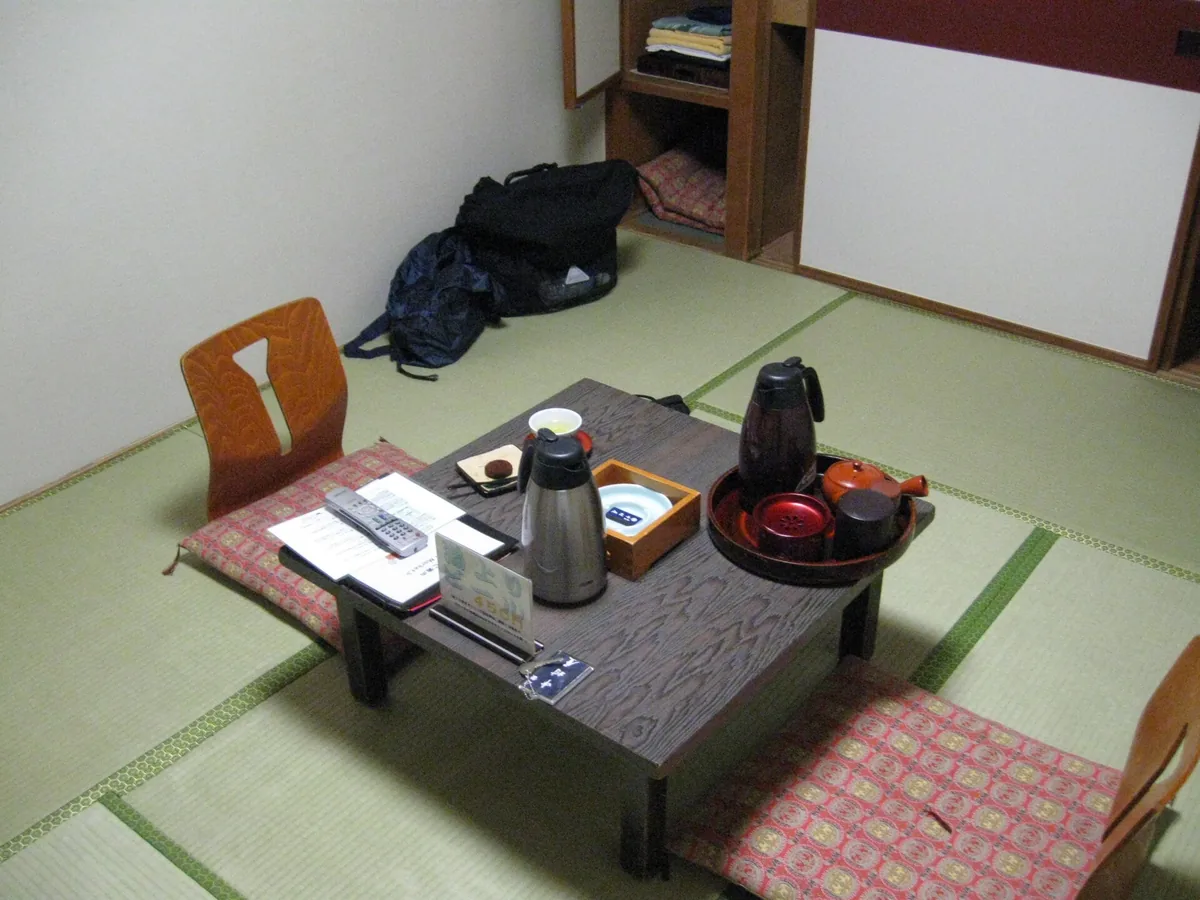
Hoshinoya Tokyo is a ryokan built vertically, seventeen floors of it, in the middle of Otemachi – banks, insurance headquarters, the palace moat two streets away. You take your shoes off at the front door and do not put them on again until you leave.
That is the whole proposition and it is not a gimmick. The floors are tatami, including the lift lobbies and the corridors; each guest floor has a shared ochanoma lounge with tea, sake and snacks; and on the top floor there is a genuine hot spring, drawn from a bore hole beneath the building, open to the sky through a shaft in the roof.
At a glance
- Format
- A ryokan rather than a hotel: tatami throughout, shoes off at the front door, a lounge on every guest floor
- Onsen
- An open-air hot spring bath on the top floor, fed by a bore hole beneath the building
- Location
- Otemachi, in the financial district, a few minutes from Tokyo Station and the palace moat
- Rates
- Set dynamically by the hotel and not published as a fixed figure – check the official booking page for your dates
- Note
- Bathing is communal and separated by sex, in the Japanese manner. Tattoo policy is set by the hotel
In this guide
The hot spring, which is the reason
Tokyo sits on water. Drill deep enough almost anywhere in the Kanto plain and you reach warm mineral water, and Hoshinoya did exactly that – the bath at the top of the building is fed from a bore hole running roughly 1,500 metres down, which makes it a real onsen rather than a heated pool.
The design is the clever part. The bathing area is on the top floor and open at the top through a tall shaft, so you are outdoors, looking up at a square of sky framed by the walls, in the middle of the financial district. You cannot see the city and the city cannot see you. Lying in hot water under falling rain, ten minutes from Tokyo Station, is a specific and genuinely strange pleasure.
It is a Japanese bath, which means communal and naked, separated by sex. You wash thoroughly at a seated shower station before entering the water; the bath is for soaking, not for cleaning. Tattoo policy at onsen varies by establishment and is set by the hotel, so ask when you book if it is relevant to you.
Rooms, food and the things that surprise people
Rooms are tatami with low furniture and futon-style bedding on a slightly raised platform, which is a compromise for guests who find floor-level sleeping difficult. They are not large by international luxury standards and that catches people out: this is a ryokan, where the value is in the format and the service rather than in square metres, and comparing it room-for-room with a western five-star is the wrong measurement.
The ochanoma lounge on each floor is where the hotel actually works. Tea, sake, rice crackers and coffee are there through the day, staffed by the floor attendants, and it functions as a shared living room for the eight or so rooms on that floor.
Dinner is a serious kaiseki-influenced affair and is booked separately; breakfast is offered in Japanese and western versions and the Japanese one is the reason to be there. Neither is included by default, so check what your rate covers.
Rates are dynamic and the hotel does not publish a fixed nightly figure. We are not going to print one; check the official booking page for your dates.
Otemachi as a base
Otemachi is an excellent and slightly counter-intuitive place to stay. It is dead at the weekend and quiet at night, which is precisely what you want from a hotel district, and it is one of the best-connected points in Tokyo: five subway lines meet here, Tokyo Station is a walk away with the Shinkansen in it, and the Narita Express and the airport buses run from there.
The Imperial Palace East Gardens are a few minutes on foot – free, and closed on Mondays and Fridays, which is worth checking against your dates. Virtù at the Four Seasons is in the same district, and Tokyo Ramen Street is in the station basement.
If the ryokan format is the appeal but the price is not, Hotel Ryumeikan Tokyo is a few minutes away and offers Japanese-style rooms at a fraction of the rate.
Frequently asked questions
Is Hoshinoya Tokyo a real ryokan?
Yes, in format. Shoes come off at the front door, the floors are tatami throughout including the corridors, each floor has a shared lounge, and there is a genuine hot spring on the top floor.
Is the onsen at Hoshinoya Tokyo a real hot spring?
Yes. It is fed by a bore hole running roughly 1,500 metres beneath the building, and the bathing area is open to the sky through a shaft in the roof.
How much does Hoshinoya Tokyo cost?
Rates are dynamic and the hotel does not publish a fixed nightly figure, so we do not print one. Check the official booking page for your dates.
Are meals included?
Not by default. Dinner is a separately booked kaiseki-influenced meal and breakfast is offered in Japanese and western versions. Check what your specific rate includes.
Can I use the bath if I have tattoos?
Onsen tattoo policies vary and this one is set by the hotel, so ask when you book rather than assuming either way.
Further reading
Official sources
- HOSHINOYA Tokyo (official) – Concept, rooms and booking
- HOSHINOYA Tokyo – hot spring and spa (official) – The rooftop onsen and the bore hole beneath the building
- HOSHINOYA Tokyo – going shoeless (official) – The shoes-off format throughout the building
- HOSHINOYA Tokyo – availability (official) – Live rates for specific dates