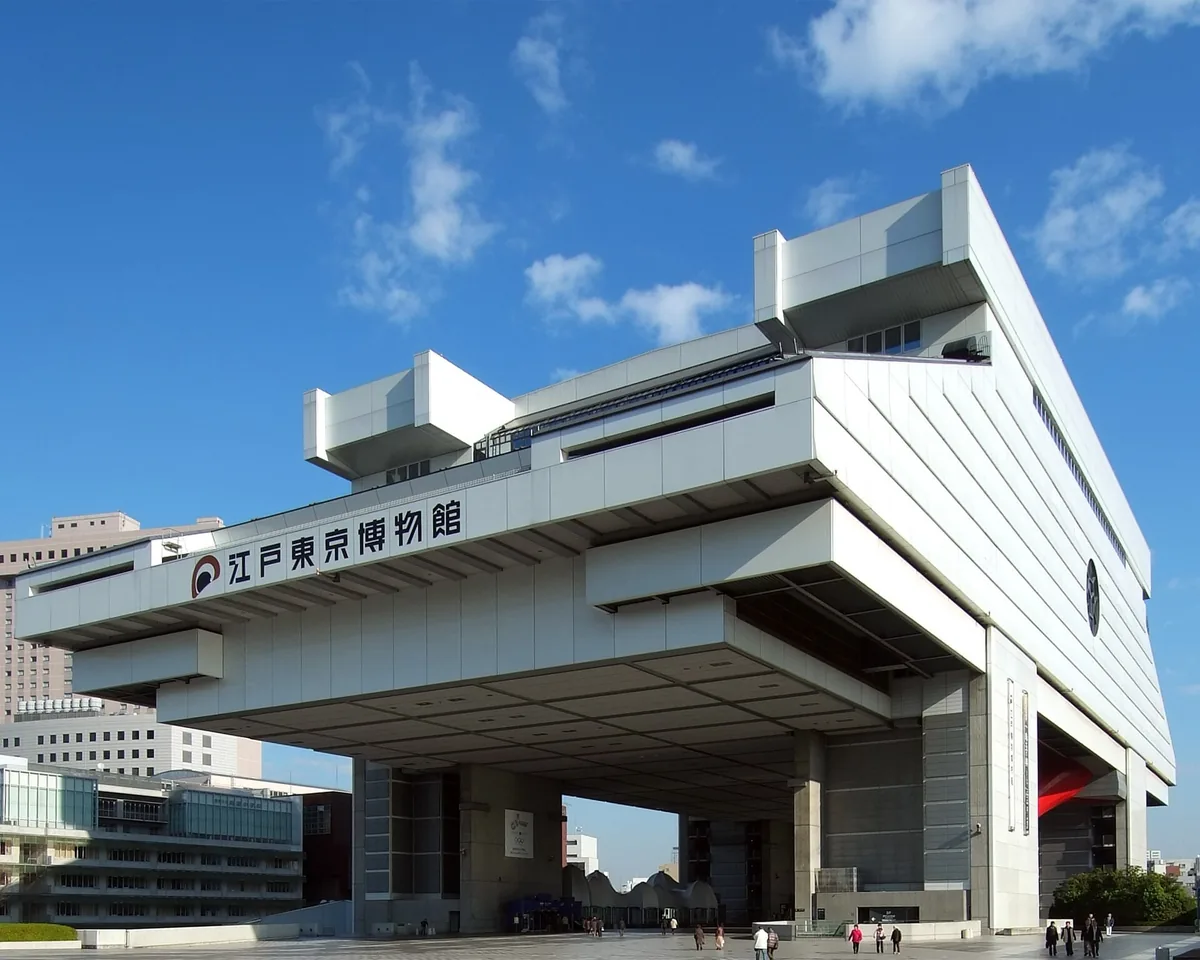
Edo-Tokyo Museum
Writes the route pages and owns the fare data behind them. Re-checks every segment on a quarterly sweep.
UpdatedThis page carries dated prices or seasonal forecasts checked on the date above, and that window has now passed. Re-check the sources at the foot of the page before you book anything.
The Edo-Tokyo Museum reopened on 31 March 2026 after roughly four years closed for its first large-scale renovation in nearly thirty years. Guides written between 2022 and 2025 list it as shut, and a lot of them still do.
Adult admission to the permanent exhibition is ¥800 and the hours are 09:30 to 17:30. On the one point where we would normally be most confident – the weekly closing day – we are not going to guess. The reopened museum’s closing days are not stated in the English material we can verify. Most Tokyo museums close on Mondays; this one may or may not. Check the museum’s own calendar for your date before you commit a morning to it.
At a glance
- Admission
- ¥800 adults, ¥480 university and vocational students, ¥400 over-65s, ¥300 high school, free below that – permanent exhibition
- Hours
- 09:30–17:30, last admission 30 minutes before closing
- Closing days
- Not published in the English material we can find. Check the museum’s own calendar before you travel – we would rather say this than guess
- Reopened
- 31 March 2026, after a four-year renovation
- Getting there
- Ryogoku (JR Sobu Line, or Toei Oedo Line), a few minutes on foot
In this guide
What is actually in it
The permanent exhibition is a walk through roughly four hundred years, from Tokugawa Ieyasu arriving in 1590 at a castle town of no particular importance, to the Edo of a million people, to the Meiji rebuild, the 1923 earthquake, the firebombing and the post-war city. It is chronological, it is physical, and it is built at a scale that photographs badly and works extremely well in person.
The centrepiece is a full-size reconstruction of the northern half of Nihonbashi bridge, which you walk across to enter the Edo section. Beyond it are reconstructed tenement rows, a kabuki theatre frontage, and a series of enormous and obsessively detailed scale models of streets, fire towers and daimyo residences. The renovation added large-scale screens and a smartphone audio guide in thirteen languages.
The thing that makes it work is that it takes ordinary life seriously. There is as much space given to how a row house was heated, what a fire brigade did, and what a bookshop sold as there is to shoguns. If you only visit one museum in Tokyo and you want to understand the city rather than look at objects, this is the one.
The building, and the neighbourhood it lands in
Kiyonori Kikutake’s 1993 building is raised on four legs to the height of Edo Castle, and it is often described as looking like a spacecraft parked in Ryogoku. It is not subtle and it was never loved locally, but the raised form is deliberate – the open plaza underneath it is public space, in a district with very little of it.
Ryogoku is the sumo neighbourhood. The Kokugikan, where the January, May and September tournaments are held, is two minutes away, and the streets between are full of chanko restaurants run by former wrestlers. Scheduling this museum on a tournament day gives you a genuinely excellent afternoon and a genuinely crowded station.
The Sumida Hokusai Museum, a small Kazuyo Sejima building devoted to the artist who was born and worked in this district, is a ten-minute walk and is the natural second stop.
How to use it, and what not to expect
Allow two hours for the permanent exhibition at a steady pace and three if you read the labels. The renovation has improved the English signage, but the audio guide is still where the depth is and it is worth the few minutes of setup.
It is an excellent wet-weather option: entirely indoors, large enough to absorb a rainy afternoon, and near the station. It is a poor last-minute evening option, since it closes at 17:30 with last entry at 17:00.
What it is not is a collection of masterpieces. If you want objects – swords, screens, Buddhist sculpture – go to the Tokyo National Museum instead. This is a history museum that explains, and its best exhibits are reconstructions rather than originals. People who arrive expecting the other kind of museum leave disappointed by one of the best-designed exhibitions in the country.
Frequently asked questions
Is the Edo-Tokyo Museum open again?
Yes. It reopened on 31 March 2026 after about four years closed for renovation. Guides published between 2022 and 2025 list it as closed and are out of date.
How much does the Edo-Tokyo Museum cost?
¥800 for adults to the permanent exhibition, ¥480 for university and vocational students, ¥400 for over-65s, ¥300 for high school students and free for junior high and younger.
What day is the Edo-Tokyo Museum closed?
We cannot tell you. The reopened museum's weekly closing days are not stated in the English material we can verify, and we would rather say so than repeat the usual assumption that it is Mondays. Check the museum's own calendar for your date.
How long does the Edo-Tokyo Museum take?
Two hours for the permanent exhibition at a steady pace, three if you read carefully. The audio guide, available in thirteen languages on your own phone, is where most of the detail sits.
Is it good for children?
Unusually good. The full-size Nihonbashi bridge, the tenement interiors and the street models are physical and walkable rather than glass-cased, which holds attention far better than a gallery of objects.
Further reading
Official sources
- Tokyo Metropolitan Government – Edo-Tokyo Museum reopening – Reopening date of 31 March 2026 and the full admission bands
- Edo-Tokyo Museum (official) – Museum's own site – the place to confirm the opening calendar for your date
- Japan Guide – Edo-Tokyo Museum – Independent description of the permanent exhibition