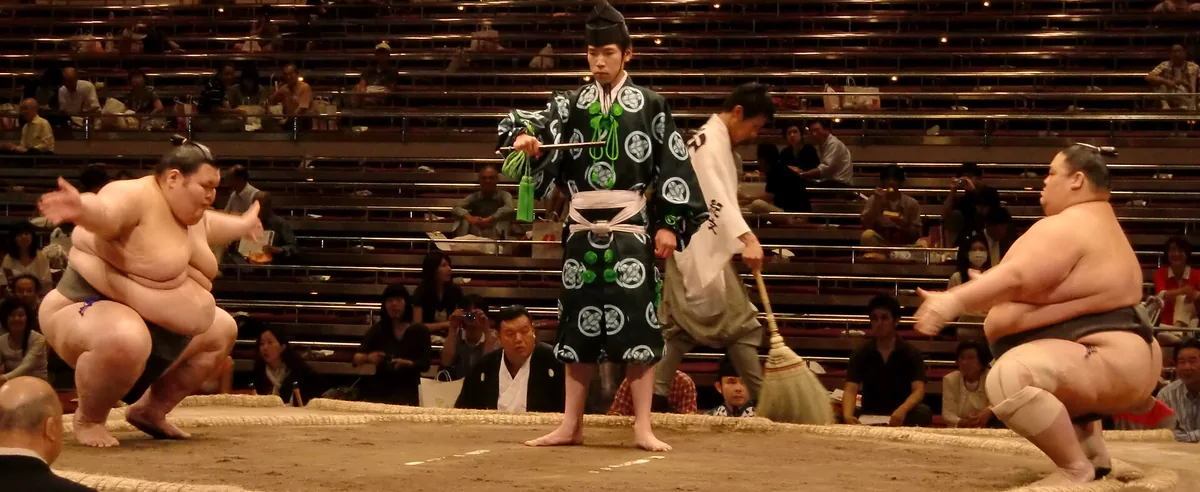
Grand Sumo in Tokyo
Writes the route pages and owns the fare data behind them. Re-checks every segment on a quarterly sweep.
UpdatedThis page carries dated prices or seasonal forecasts checked on the date above, and that window has now passed. Re-check the sources at the foot of the page before you book anything.
Six grand sumo tournaments are held a year and three of them are in Tokyo, at the Ryogoku Kokugikan. In 2026 the Tokyo dates are 11–25 January, 10–24 May and 13–27 September, each running fifteen consecutive days. Tickets start at ¥3,500.
The scheduling quirk worth knowing is this: the banzuke – the ranking sheet that determines who fights at what rank – is published after tickets go on sale. You are buying before you know the card. There is no way round it, everyone is in the same position, and the practical consequence is simple: buy on the day sales open rather than waiting to see who is competing.
At a glance
- 2026 Tokyo dates
- 11–25 January, 10–24 May, 13–27 September. Each tournament runs fifteen consecutive days
- Tickets
- From ¥3,500. Box seats and ringside cost considerably more and sell out first
- The catch
- The banzuke, the ranking sheet that says who is fighting at what rank, is published after tickets go on sale
- Venue
- Ryogoku Kokugikan, next to the Edo-Tokyo Museum
- Timing
- Doors open in the morning for the lower divisions; the top division fights in the late afternoon
In this guide
How a tournament day actually works
Doors open in the morning and the lowest divisions fight first, in a nearly empty hall, to no commentary and very little ceremony. The bouts move up through the divisions all day, the hall fills as the standard rises, and the makuuchi top division fights in the late afternoon, finishing in the early evening.
Two consequences. First, a ticket is a whole-day ticket and you can come and go, so the efficient plan is to arrive around the middle of the day. Second, the morning is genuinely worth seeing precisely because it is empty: these are teenagers at the bottom of a brutal hierarchy fighting in front of nobody, and you can sit close to the ring for it whatever your seat says.
The ceremony is half the point. The ring-entering rituals before the top two divisions, the salt throwing, the referee’s costume and fan, the stamping to drive out spirits – all of it is Shinto practice rather than sports pageantry, and the wrestlers are performing a rite as much as a contest. The bouts themselves are frequently over in under ten seconds, which is a surprise the first time.
Tickets: what to buy and when
Chair seats in the upper tiers start around ¥3,500 and are perfectly good – the hall is not large and there is no bad view of a ring at the centre of it. These are the sensible buy.
Masu seats are the boxes on the floor: a square of cushions where you sit on the floor, sold as a box of two or four, considerably more expensive and traditionally including food and souvenirs. They are the authentic experience and they are physically uncomfortable for anyone not used to sitting on the floor for several hours.
Ringside seats are expensive, rarely available to the general public, and put you where a wrestler may land on you. That is not a figure of speech.
Sales open some weeks before each tournament through the official channels. The first and last few days of a tournament sell fastest – the final Sunday decides the championship – and weekdays in the middle are the easiest to get. Same-day tickets are sold in limited numbers in the morning at the venue for those willing to queue early.
Ryogoku, and what to do around it
The Kokugikan is in Ryogoku, the sumo district, and on a tournament day the neighbourhood is the point. Wrestlers walk to the venue in yukata and sandals through ordinary streets, and stables are scattered through the surrounding blocks.
Eat chanko-nabe, the protein-heavy hotpot wrestlers live on. Several restaurants around the station are run by retired wrestlers and serve it properly; it is cheap, enormous and much better than its reputation as fuel.
The Edo-Tokyo Museum is two minutes away and reopened on 31 March 2026 after four years closed, which makes the combination of the two a very strong day. Tokyo Skytree is fifteen minutes north and Asakusa is across the river.
If your dates do not coincide with a tournament, morning training visits at stables are arranged through agencies and hotels, with strict etiquette and no guarantee. That is a different experience, quieter and closer, and it is not a substitute for fifteen days in the Kokugikan.
Frequently asked questions
When is sumo in Tokyo in 2026?
11 to 25 January, 10 to 24 May and 13 to 27 September, at the Ryogoku Kokugikan. Each tournament runs fifteen consecutive days.
How much are sumo tickets?
From ¥3,500 for upper-tier chair seats. Floor boxes and ringside seats cost considerably more and sell out first.
Why can't I see who is fighting before I buy?
Because the banzuke, the ranking sheet that sets the card, is published after tickets go on sale. Everyone buys blind, so buy as soon as sales open.
What time should I arrive?
A ticket covers the whole day. The lower divisions fight from the morning in a near-empty hall and the top division fights in the late afternoon, so arriving around the middle of the day is the usual compromise.
What should I eat at the sumo?
Chanko-nabe, the hotpot wrestlers train on, at one of the Ryogoku restaurants run by retired wrestlers. It is cheap, large and genuinely good.
Further reading
Official sources
- Nihon Sumo Kyokai – grand tournament information (official) – Tournament schedule, results and the banzuke
- Nihon Sumo Kyokai – tickets (official) – Ticket types, prices and sale dates
- Tokyo Metropolitan Government – Edo-Tokyo Museum reopening – The neighbouring museum, reopened 31 March 2026