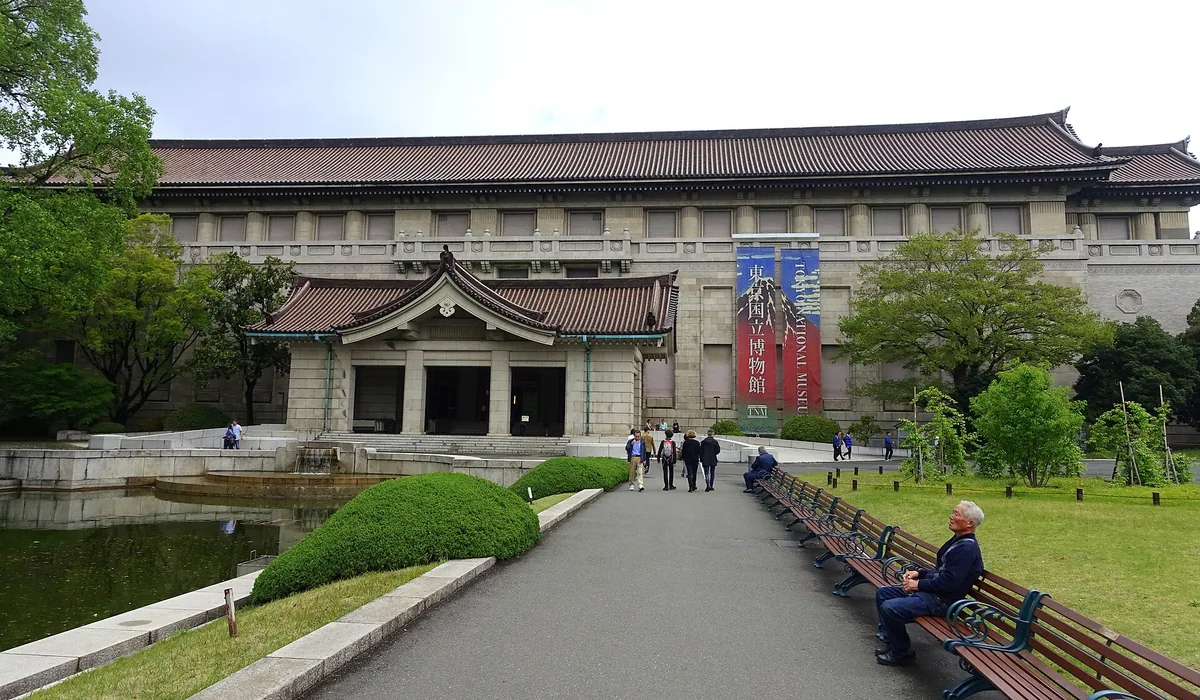
Tokyo National Museum

Writes the autumn colour pages and follows the forecasts as they are issued, which is more than one forecast.
UpdatedThis page carries dated prices or seasonal forecasts checked on the date above, and that window has now passed. Re-check the sources at the foot of the page before you book anything.
The Tokyo National Museum costs ¥1,000 for an adult, is closed on Mondays, and stays open until 20:00 on Fridays and Saturdays. It is free for under-18s and over-70s with identification, which is a better deal than most families realise.
The thing worth knowing before you buy is that the ticket admits you to six separate buildings spread around a large campus, and most visitors spend their entire visit in the first one and leave thinking they have seen the museum. They have seen roughly a fifth of it.
At a glance
- Admission
- ¥1,000 for adults to the permanent collection; free for under-18s and over-70s with ID. Special exhibitions are ticketed separately
- Hours
- 09:30–17:00, with late opening until 20:00 on Fridays and Saturdays. Last admission 30 minutes before closing
- Closed
- Mondays, opening the following day when the Monday is a national holiday, and over the New Year period
- What the ticket covers
- Honkan, Toyokan, Heiseikan, Hyokeikan, the Gallery of Horyuji Treasures and the Kuroda Memorial Hall
- Time needed
- Two hours for Honkan alone; a full day to see the site properly
In this guide
The six buildings, and which ones to actually do
Honkan, the 1938 main gallery straight ahead of the entrance, is Japanese art from prehistory to the nineteenth century: swords, armour, Buddhist sculpture, screens, lacquer, ceramics and ukiyo-e. It is the default and it deserves to be. Two hours minimum.
The Gallery of Horyuji Treasures, the Yoshio Taniguchi building to the left, is the one most people never reach and the one connoisseurs go back for. It holds around three hundred objects given to the imperial household by Horyuji temple in 1878, including a room of small seventh-century gilt-bronze Buddhas lit individually in near darkness. It is the single most beautiful room in Tokyo and it is usually almost empty.
Toyokan is Asian art beyond Japan – Chinese, Korean, Central Asian, and a strong Egyptian section. Heiseikan holds Japanese archaeology and hosts the major special exhibitions. Hyokeikan, a 1909 Meiji building, opens only for special shows. Kuroda Memorial Hall is a small free gallery of the western-style painter Kuroda Seiki.
A realistic first visit is Honkan plus Horyuji Treasures, in that order, in about three and a half hours.
The collection rotates, which changes how you plan
The museum holds well over a hundred thousand objects and shows a small fraction at a time. Light-sensitive works – screens, scrolls, textiles, prints – are rotated on cycles measured in weeks, and National Treasures appear and disappear from the galleries accordingly.
This has two consequences. First, do not travel for a specific object without checking the current display listing, because the famous thing you came for may be in storage. Second, it makes the museum genuinely repeatable: coming back two years later is a different visit, not the same one.
Special exhibitions in Heiseikan are ticketed separately and are frequently the reason for a queue at the gate. They are often excellent and they are almost always crowded; a separate exhibition ticket usually includes the permanent collection, so check before paying twice.
Using Ueno properly
The museum sits at the north end of Ueno Park, which also holds the National Museum of Nature and Science, the National Museum of Western Art in a Le Corbusier building, the Tokyo Metropolitan Art Museum, a zoo and a large pond. It is the densest concentration of museums in Japan and a rainy day here is an easy day.
The Friday and Saturday late opening to 20:00 is underused. The galleries after six are quiet, the lighting in Honkan is better than in daylight, and it turns the museum into an evening rather than a whole daytime commitment.
Ten minutes north-west on foot is Yanaka, which is the correct thing to do afterwards: low buildings, a cemetery full of cherry trees, and the old-town walk. Ueno Station itself is a major hub and is on the way to almost everywhere.
Frequently asked questions
How much is the Tokyo National Museum?
¥1,000 for an adult to the permanent collection. Under-18s and over-70s enter free with identification. Special exhibitions are charged separately.
What day is the Tokyo National Museum closed?
Mondays, except when the Monday is a national holiday, in which case it closes the following day instead. It also closes over the New Year period.
How many buildings does the ticket cover?
Six: Honkan, Toyokan, Heiseikan, Hyokeikan, the Gallery of Horyuji Treasures and the Kuroda Memorial Hall. Most visitors only see Honkan.
Which building should I see if I only have two hours?
Honkan, the main Japanese gallery. If you can add forty minutes, add the Gallery of Horyuji Treasures, which is the quietest and most beautiful space on the site.
Is the museum open in the evening?
Yes, until 20:00 on Fridays and Saturdays, with last admission at 19:30. It is the quietest time to visit and the lighting in Honkan is at its best.
Further reading
Official sources
- Tokyo National Museum (official) – Opening hours, late openings and the six buildings
- Tokyo National Museum – admission and hours – Admission bands, free categories and closing days
- GO TOKYO – spot directory – Tokyo Convention and Visitors Bureau listings for Ueno Park