Bar Benfiddich

Writes the logistics pages. Works to one rule: a price comes from the company that charges it.
UpdatedThis page carries dated prices or seasonal forecasts checked on the date above, and that window has now passed. Re-check the sources at the foot of the page before you book anything.
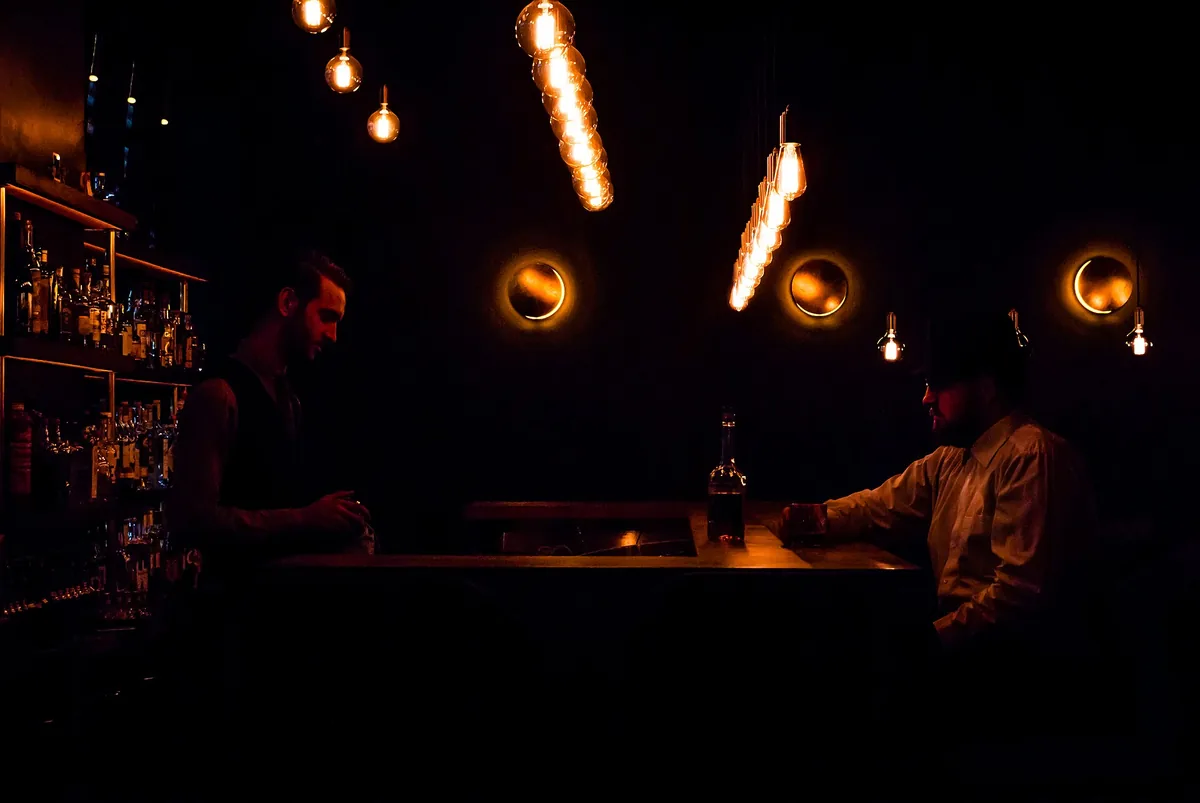
Bar Benfiddich sits on the ninth floor of an unremarkable Nishi-Shinjuku office block, behind a door with almost no signage, and it is ranked on both the World’s 50 Best Bars and Asia’s 50 Best Bars lists. There is no menu.
Hiroyasu Kayama grows a large part of what he pours. Herbs, roots and botanicals come from a farm his family works outside Tokyo, and he macerates, distils and grinds them behind the bar, frequently with a pestle and mortar, in front of you. It is the only bar of its kind we know of, and the performance is not decoration – it is how the drink is actually made.
At a glance
- What it is
- A small upstairs cocktail bar built on botanicals the bartender grows, distils and grinds himself
- Menu
- There is none. You describe what you want and Kayama-san builds it
- Seats
- Around a dozen. Solo drinkers and pairs are the natural fit; large groups are not
- Hours
- Set by the bar and changed at its discretion – check before going rather than trusting a listing
- Cost
- Premium for Tokyo, with a service or seating charge. Assume this is a two-drink evening, not a session
In this guide
How to drink here
Since there is no list, the transaction is a conversation. Describe, do not order. Spirit-forward or refreshing, bitter or sweet, herbal or citrus, something to start with or something to finish on. Kayama-san speaks enough English for this and the whole bar runs on it. Asking for a Negroni here is not wrong, but it is like asking a tailor for something off the peg.
Two things are worth asking about specifically. The first is the absinthe and wormwood work – he distils his own and the drinks built on it are the clearest expression of what the bar is for. The second is anything made with fresh roots ground at the counter: angelica, gentian and their relatives, which produce a bitterness you simply cannot buy in a bottle.
Watch the process. Ingredients come out of jars and drawers, get weighed, crushed and strained, and the whole thing takes several minutes per drink. That pace sets the rhythm of the room: this is a bar for two or three carefully made drinks over a couple of hours, not for a round.
Etiquette, cost and the door
Tokyo’s serious cocktail bars run on quiet. Keep your voice down, do not take flash photographs, do not photograph other customers, and ask before photographing the bartender at work. None of this is precious; a twelve-seat room amplifies everything.
Expect a seating or service charge on top of the drinks. As with Golden Gai, this is a normal Japanese practice and not a tourist surcharge, though the amount here is higher than in an alley bar. Drinks are priced at the top of the Tokyo range, which is reasonable for something this labour-intensive and which does make it an occasion rather than a habit.
The bar is small and does not always take reservations, so the practical strategy is to arrive early in the evening. Later on, the queue on the stairs is real. If it is full, the surrounding blocks of Nishi-Shinjuku are dense with good bars and you have lost nothing but the specific room.
Cash is worth carrying, as it is everywhere in Tokyo nightlife, though bars at this level generally take cards.
Where it sits in Tokyo drinking
Tokyo has a strong claim to be the best cocktail city in the world, and it is unusual in sustaining several completely different traditions at once. There is the precision school – hard ice, hand-carved, a Martini built to a tolerance measured in grams. There is the hotel school, of which Virtu at the Four Seasons Otemachi is the current best example. And there is Golden Gai, which is not about the drinks at all.
Benfiddich fits none of those. It is closer to a nineteenth-century apothecary than to a cocktail bar, and its closest relatives are in Europe rather than Japan. Doing all three of these bars on one trip is a genuine education in how differently the same city can pour a drink.
It is a five-minute walk from the Shinjuku skyscraper district, which means the free 202-metre observatory at the Metropolitan Government Building makes a good thing to do immediately before.
Frequently asked questions
Does Bar Benfiddich have a menu?
No. You describe the kind of drink you want – spirit-forward, bitter, herbal, refreshing – and the bartender builds it from what he has, much of which he grew and processed himself.
Do I need a reservation at Bar Benfiddich?
It is a small room and does not always take bookings, so the reliable approach is to arrive early in the evening. Later on there is often a queue on the stairs.
Is there a cover charge?
Expect a seating or service charge on top of the drinks. This is standard practice in Japanese bars rather than a tourist surcharge, and the drinks themselves are at the top of the Tokyo price range.
Can I take photographs?
Ask first, no flash, and do not photograph other customers. The room seats around a dozen people and quiet is part of the format.
Is Bar Benfiddich suitable for a group?
Not really. With about a dozen seats and several minutes of work per drink, it suits solo drinkers and pairs. A group of five will struggle to be seated together and will change the room.
Further reading
Official sources
- The World’s 50 Best Bars – Bar Benfiddich – Current world ranking and description
- Asia’s 50 Best Bars – Bar Benfiddich – Asia ranking
- 50 Best Discovery – Bar Benfiddich, Tokyo – Venue profile