Arashiyama

Writes the autumn colour pages and follows the forecasts as they are issued, which is more than one forecast.
UpdatedThe Arashiyama bamboo grove is the most photographed thing in Kyoto and the most oversold. The walkable path is roughly 150 to 200 metres long, it is fenced on both sides with bamboo hurdling that keeps you on the track, and it runs beside a road that rickshaws and service vehicles use. It takes four minutes to walk.
What makes the trip worthwhile are the two paid gardens at either end of it. Tenryu-ji, whose Sogenchi garden the path runs out of the back of, is ¥500 and is one of the finest gardens in Japan. Okochi Sanso, at the far end, is a hillside villa and garden that almost nobody continues to.
At a glance
- Bamboo grove
- Free, open at all hours, and roughly 150 to 200 metres of fenced path
- Tenryu-ji
- ¥500 for the garden, plus ¥300 to enter the buildings. 8:30–17:00, last entry 16:50
- Okochi Sanso
- A separate villa and garden at the far end of the bamboo path, reached on foot
- Getting there
- JR Sagano line to Saga-Arashiyama, Randen tram to Arashiyama, or Hankyu to Arashiyama across the river
In this guide
What the bamboo path is really like
It is genuinely beautiful for about ninety seconds, usually the ninety seconds in which nobody happens to be in front of your camera. The stems are enormous, the light is green and the sound is real – the grove is one of the hundred soundscapes officially designated by the Japanese environment ministry, and on a windy day that is not marketing.
But the fencing means you cannot step off the path, the corridor is narrow, and between about 9:00 and 16:00 it is a single moving file of people. There is no viewpoint, no clearing and no way round. The photographs you have seen were taken at first light with a long lens.
If you want that version, you need to be there before 7:30. The grove has no gate and no opening hour, so this is entirely available – and it is the only way the bamboo justifies the journey out to the western edge of the city.
Tenryu-ji is the reason to come
Tenryu-ji was founded in 1339 and its Sogenchi pond garden, laid out by Muso Soseki, is the oldest garden in Japan surviving in substantially its original design. It is a borrowed-landscape composition: the pond in front, and then the Arashiyama hills used as the back of the picture, so the garden appears to be several kilometres deep.
The garden alone is ¥500. Adding the buildings – the Kuri, the Ohojo and the veranda you can sit on looking straight down the pond – costs ¥300 more, and it is the better ticket: the point of the composition is the seated view from the hall, not the walk round.
The Cloud Dragon painting on the Dharma Hall ceiling is a further ¥500 and is only open at weekends, on public holidays and during the spring and autumn special periods. Hours are 8:30 to 17:00 with last admission 16:50, and the north gate of the garden opens directly onto the bamboo path – which is the sensible way to do the whole thing in one movement.
Okochi Sanso, and the rest of the district
Walk to the end of the bamboo and the crowd turns left toward the station. Straight on is Okochi Sanso, the villa and gardens built by the silent-film actor Okochi Denjiro over some thirty years. It charges admission and includes matcha and a sweet in the price, the circuit climbs to a view over the city and the Hozu gorge, and on a busy Saturday there may be a dozen people in it.
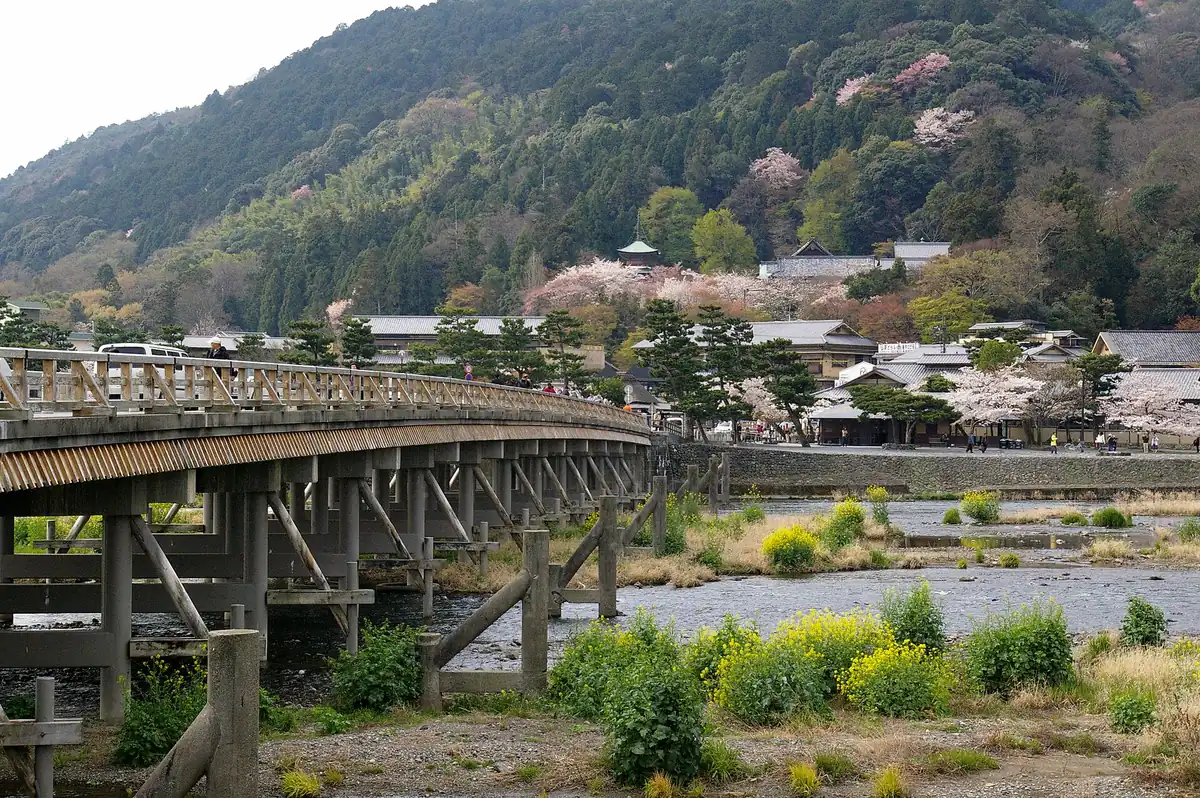
The rest of Arashiyama repays a half-day rather than an hour. The Hozugawa boat ride arrives here from Kameoka after two hours on the river. Gio-ji, a small moss temple fifteen minutes north, and Jojakko-ji on the hillside are both excellent and almost unvisited. The Togetsukyo bridge is pleasant and completely mobbed.
Come by JR to Saga-Arashiyama rather than the Randen tram if you are starting from Kyoto Station – it is faster and the tram is the more interesting way back. In late November the whole district runs at capacity and the last trains out are unpleasant; aim to leave by four.
Frequently asked questions
How long is the Arashiyama bamboo grove?
The walkable path is roughly 150 to 200 metres, about four minutes at a normal pace. It is fenced on both sides and shares its corridor with a service road used by rickshaws and vehicles.
Is the bamboo grove free?
Yes. It is a public path with no gate, no ticket and no closing time, which is why going before 7:30 in the morning is both possible and the only way to see it without a crowd.
How much is Tenryu-ji?
¥500 for the garden and ¥300 more to enter the buildings, which is the ticket worth having. The Cloud Dragon ceiling painting is a further ¥500 and is only shown at weekends, on public holidays and in the special spring and autumn periods.
What is worth doing besides the bamboo?
Tenryu-ji's Sogenchi garden, Okochi Sanso villa at the far end of the bamboo path, and the small hillside temples north of the grove such as Gio-ji and Jojakko-ji. All are quieter than the bamboo and better.
How do you get to Arashiyama?
JR Sagano line to Saga-Arashiyama is the quickest from Kyoto Station. The Randen tram to Arashiyama and the Hankyu line to Arashiyama across the river are both slower and more enjoyable, and make a good return route.
Further reading
Official sources
- Tenryu-ji – admission and access (official) – ¥500 garden, ¥300 buildings supplement, ¥500 Cloud Dragon, 8:30–17:00
- Okochi Sanso Garden (official English site) – Villa and garden at the northern end of the bamboo path; matcha included with admission
- Tenryu-ji (official English site) – Temple history and the Sogenchi garden